Advanced Oxygenation in Aquaculture Systems
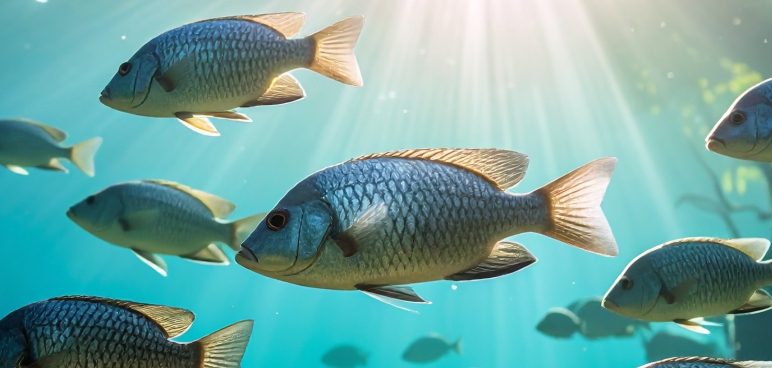
Efficient oxygenation is a critical parameter governing aquatic health, biological activity, and system productivity. Conventional aeration systems often fail to maintain stable dissolved oxygen (DO) levels, leading to stress, inefficiencies, and operational challenges.
This case study, conducted in collaboration with the Kerala University of Fisheries and Ocean Studies (KUFOS), evaluates the effectiveness of NICO Nanobubble Oxygen (NB-O₂) technology in delivering rapid, stable, and sustained oxygenation under controlled aquaculture conditions.
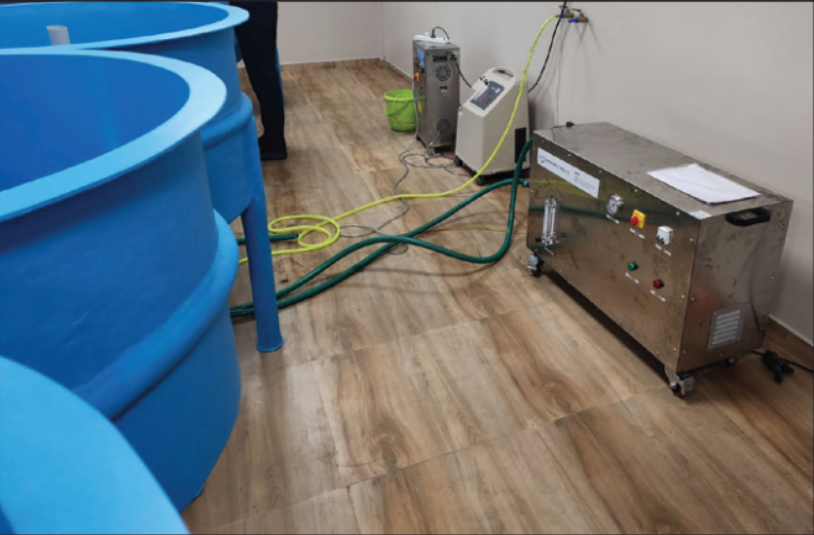
The NICO nanobubble oxygenation system was utilized in the study to generate ultra-fine oxygen bubbles (<200 nm), enabling efficient gas transfer and sustained oxygen availability within the system.
Unlike conventional aeration, nanobubbles remain suspended in water, enabling continuous oxygen availability and significantly reducing gas wastage.
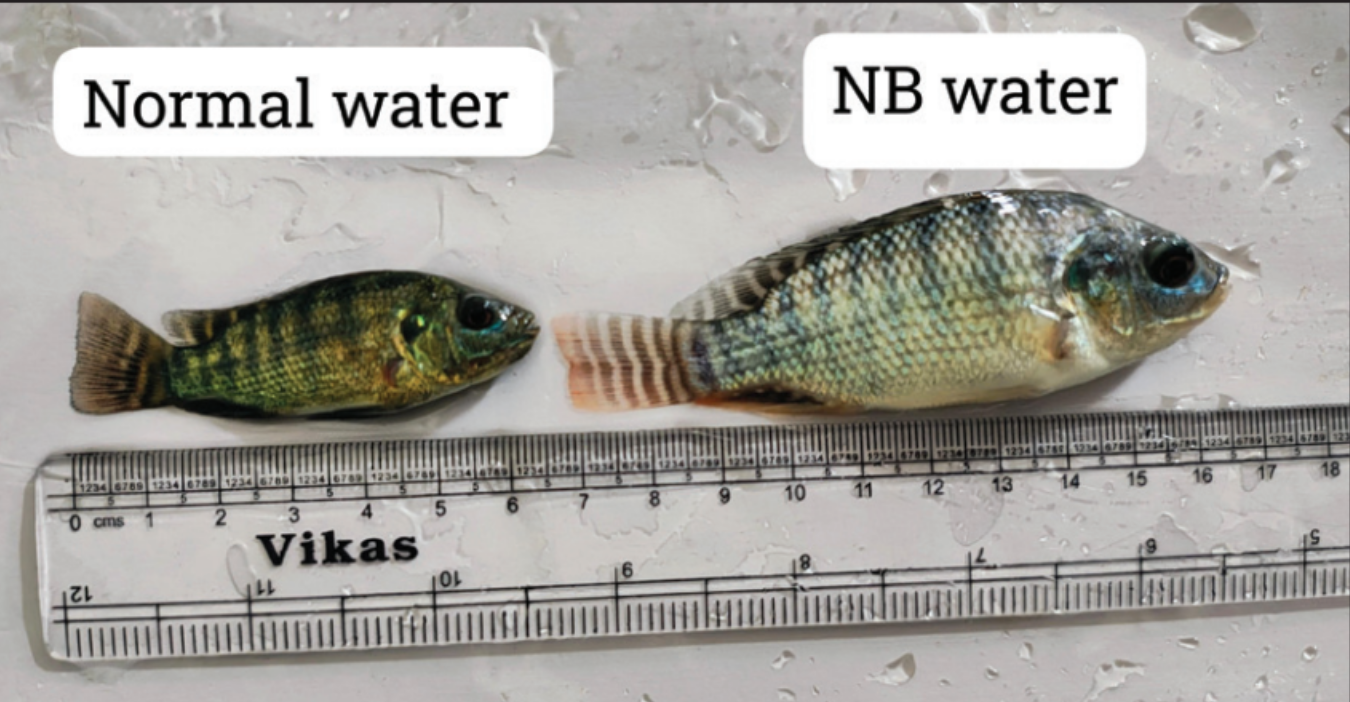
| Parameter | Unit | Conventional Aeration | NICO NB-O₂ System |
|---|---|---|---|
| Time to Increase DO | - | Gradual, inefficient | Rapid (10 min to reach ~15 mg/L) |
| Peak DO Levels | ppm | Limited | Up to 20 ppm |
| DO Stability | mg/L (duration) | Short-lived | Sustained (~6 mg/L for 8 h) |
| Oxygen Distribution | - | Non-uniform | Uniform across water column |
| Aeration Frequency | time cycle | Continuous | Intermittent (10 min / 8 h) |
| Oxygen Utilization Efficiency | % | Low | High |
The study conclusively demonstrates that NICO’s nanobubble technology provides a highly efficient, stable, andenergy-optimized oxygenation solution compared to conventional aeration systems. The ability to rapidly elevate dissolved oxygen levels and sustain them over extended periods represents a significant advancement in aquatic system management.