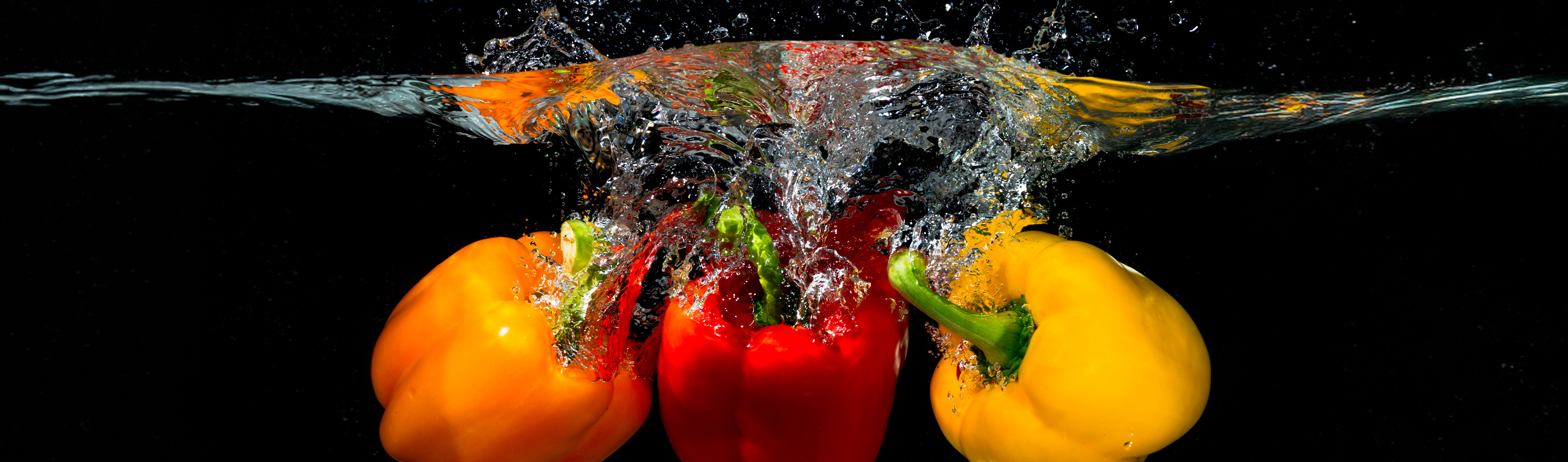

NICO Nanobubbles offers cost-effective sanitization using chemical-free ozone nanobubble-infused water.
Our trials and field pilots demonstrate effective biofilm removal with nanobubbles, extended shelf life, and substantial reductions in targeted pathogens.
Benefits of NICO Nanobubbles in Vegetable Wash
NICO Nanobubble ozonated water doesn't produce harmful chlorine by-products like chloramines and doesn't require a specialized disposal system. In certain municipalities, processors may need to treat chlorine with extra chemicals before disposal. Nanobubble systems for vegetable cleaning and processing naturally break down ozone into oxygen, posing no harm and allowing the release of ozonated wash water back into the environment or for recycling.
Early research findings indicate that nanobubble solutions for fruit and vegetable washing hold significant promise for effective cleaning. They have shown the ability to eliminate Escherichia coli O157:H7 in contaminated water that doesn't contain organic matter. Additionally, they have demonstrated substantial reductions of Salmonella and Listeria bacteria.
These NICO Nanobubbles also prove effective in reducing germ levels in dirty water and on surfaces where food comes into contact, supporting thorough cleanliness. Furthermore, studies conducted in collaboration with our university partner reveal that nanobubble systems for vegetable cleaning and processing, supplied by a trusted nanobubble system supplier, are comparable to conventional cleaning chemicals in their ability to remove slimy biofilms from surfaces. Moreover, they exhibit a unique capacity to help prevent the formation of new biofilms over time.
NICO VANTA for Food and Beverage Processing
NICO VANTA is an advanced nanobubble system designed to enhance gas transfer, water quality, and sanitation across food and beverage processing operations. Generating ultra-fine nanobubbles measuring 50–200 nm, the system achieves gas transfer efficiency above 85%, supporting efficient gas dissolution and improved gas–liquid interaction. NICO VANTA can be integrated into existing production-water loops, washing systems, fermentation tanks, and clean-in-place (CIP) systems. This allows food and beverage manufacturers to incorporate nanobubble technology into existing infrastructure while supporting process consistency, hygiene, and operational efficiency.
Beverage Oxygen Management and Carbonation
Dissolved gas levels influence beverage quality, freshness, and processing consistency. NICO VANTA supports precise gas management by improving gas dissolution and enabling more controlled oxygen and carbon dioxide transfer in suitable applications. For carbonated beverages, enhanced CO₂ dissolution can support carbonation efficiency and consistency. For products where dissolved oxygen must be controlled to preserve freshness and quality, the system can support appropriate oxygen-management strategies based on the beverage formulation and processing requirements.
Fermentation Process Optimization
Fermentation performance depends on factors such as gas availability, temperature, pH, and microbial activity. NICO VANTA can support gas-transfer management in suitable fermentation processes, including applications where oxygen availability influences process performance. Improved gas–liquid interaction can help manufacturers optimise operating conditions and support process consistency. The appropriate gas and operating parameters depend on the fermentation organism, product formulation, and production stage. Gas management should therefore be configured to meet the specific requirements of each process.
Clean-in-Place (CIP) and Biofilm Management
Biofilm accumulation in tanks, pipes, processing equipment, and water distribution loops can compromise hygiene and increase cleaning requirements. NICO VANTA can be integrated into suitable CIP and process-water systems to support cleaning performance and help manage biofilm formation. When configured for ozone-based treatment, nanobubble technology can support oxidation and sanitation processes. This may help food processors optimize cleaning programmes and reduce dependence on conventional chemical treatments in suitable applications. Cleaning effectiveness should be validated against the target microorganisms, surface materials, organic load, and applicable food-safety requirements.
Dairy Processing and Wastewater Treatment
Dairy processing generates wastewater containing organic matter, fats, oils, and suspended solids. NICO VANTA can support suitable wastewater-treatment applications by enhancing gas transfer and supporting treatment processes designed to improve water quality. Depending on the wastewater characteristics and treatment configuration, nanobubble integration can be evaluated for improved treatment efficiency and water reuse. This can help dairy and food-processing facilities strengthen water-management practices while supporting compliance with applicable discharge and reuse standards.
Food Preservation and Shelf-Life Management
Maintaining product quality and freshness is a key objective across food processing and preservation. Nanobubble technology can be evaluated for applications involving produce washing, surface sanitation, and dissolved-gas management. Ozone nanobubbles can support microbial reduction in suitable washing applications, while oxygen management may be relevant to controlling oxidation in selected products and processes. The effect on shelf life depends on the food matrix, storage conditions, packaging, target microorganisms, and treatment protocol. Product-specific testing is essential to establish the appropriate treatment conditions and verify preservation outcomes.
Key Benefits of NICO VANTA in Food and Beverage Operations
- Enhanced gas transfer: Gas transfer efficiency above 85% to support effective gas dissolution.
- Improved washing performance: Supports contaminant removal during fruit and vegetable washing.
- Biofilm management: Helps manage biofilm formation in suitable process-water and cleaning systems.
- Consistent carbonation: Supports efficient CO₂ dissolution in beverage production.
- Fermentation support: Enables improved gas-transfer management in suitable fermentation processes.
- Water-quality improvement: Supports wastewater treatment and water reuse strategies in food and dairy processing.
- Integration with existing systems: Designed for installation in production-water loops, washing systems, fermentation tanks, and CIP systems.
Upgrade Your Food Processing Operations
From fruit and vegetable washing to beverage carbonation, fermentation, CIP sanitation, and dairy wastewater treatment, NICO VANTA offers a versatile approach to gas-transfer management in food and beverage operations. Integrating nanobubble technology into suitable processes can help manufacturers improve hygiene, optimise processing performance, and strengthen water-management practices. Contact NICO Nanobubbles to identify the appropriate system configuration for your production line, water-treatment requirements, and process objectives.