Build Treatment Around the Next Use
Singapore’s emphasis on water recycling makes treatment quality and operational reliability central to reuse decisions. At a project level, the correct starting point is the intended application and the water quality it requires.
NICO nanobubble systems may support selected stages within a complete treatment train. Their contribution must be defined through process assessment and testing; improved dissolved oxygen alone does not establish that treated water is suitable for reuse.
Common Project Challenges
- Variable influent flow and organic loading
- Oxygen limitations within aerobic treatment
- Restricted space for additional equipment
- Solids or contaminants affecting downstream stages
- Different quality requirements between reuse applications
- Changes during storage and distribution
- Need for representative monitoring and reliable alarms
- Off-specification water requiring controlled handling
Define the Treatment Requirement
Intended End Use: Identify the recipient process, exposure routes and quality requirements before choosing equipment.
Influent Characteristics: Assess organic load, solids, nutrients, salinity and relevant contaminants. Not every limitation can be addressed through gas transfer.
Existing Treatment: Review screening, equalisation, biological stages, separation, filtration and disinfection as applicable.
Delivery Conditions: Consider storage time, distribution integrity and the point at which water quality must be verified.
Where Nanobubble Oxygenation May Fit
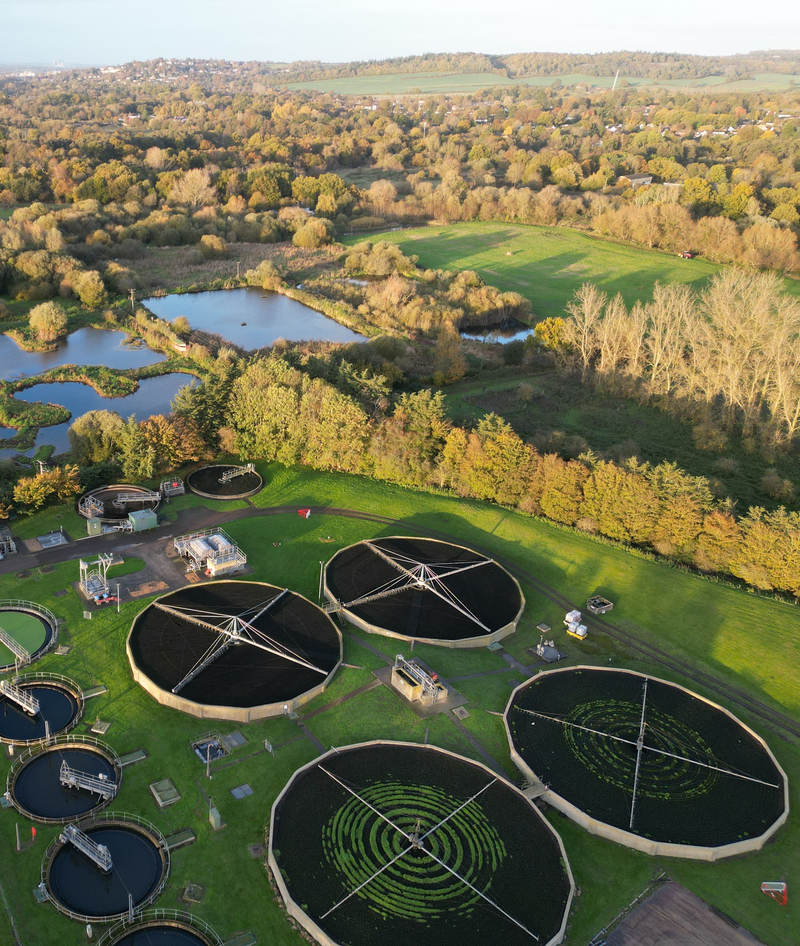
Air or oxygen may supplement delivery in compatible aerobic stages where gas transfer is demonstrably limiting. Retention time, biomass health, pH and circulation remain important.
Return-water placement should preserve anoxic zones and other intended process boundaries. More oxygen throughout the plant is not necessarily beneficial to every treatment function.
Existing aerators may provide mixing as well as oxygen. Retain or deliberately replace those functions during evaluation. A new generator should be assessed as part of the complete arrangement.
Selected Polishing Applications
Ozone may be evaluated for defined oxidation objectives after treatability testing. Assess demand, contact, residuals, by-products and downstream effects alongside material compatibility and operator exposure.
Filtration, membranes, disinfection or other stages may still be required. Nanobubbles should not be presented as a replacement for all treatment barriers or as a method that automatically produces high-grade reclaimed water.
Plan for Reliable Reuse
Potential project assessments may concern suitable utility, industrial or other non-potable uses. Each requires its own quality and operational review; examples are not blanket approvals.
Define the response to failed treatment, sensor faults or unusual influent. Consider diversion, isolation and alternative supply where relevant. Reuse demand should not override a water-quality failure.
Storage and distribution deserve the same attention as treatment. Sedimentation, regrowth or cross-connections can undermine quality after water leaves the plant.
Establish the Baseline
Measure flow, organic loading, solids, temperature, pH and relevant nutrients or contaminants. Use microbiological and end-use-specific testing where required by the reuse assessment.
Record current equipment, energy and operating variation. Compare the installation under representative conditions, including pumping, gas supply and retained treatment functions.
Water savings should reflect verified displacement of another supply. The volume treated is not automatically equal to the volume successfully reused.
Verify the Contribution
Agree monitoring locations, acceptance criteria and operating limits before the pilot. Verify quality at the required delivery point, not only near the treatment outlet.
The result should identify what improved and which barriers remain necessary. Final use requires the appropriate site-specific technical and regulatory review. NICO proposals do not imply adoption by, or endorsement from, Singapore’s national water agency.