Configurable Gas Transfer for New Zealand Communities
New Zealand wastewater networks serve large cities, regional centres and small communities. Plants vary in age, process, loading, operator resources and receiving environment. Treatment must manage everyday flows, wet-weather events, odour, consent conditions and long-term infrastructure pressure.
NICO systems can introduce air, oxygen or properly controlled ozone into selected treatment stages. The role may involve aerobic biology, equalisation, odour management, polishing or an appropriately designed reuse process.
Common Municipal Challenges
- Variable organic and hydraulic loading
- Wet-weather inflow and infiltration
- Uneven oxygen distribution in tanks or lagoons
- Odour formation in low-oxygen areas
- Aging assets and limited retrofit space
- Smaller plants with constrained operator capacity
- Discharge requirements for land, freshwater or coastal receiving waters
- The need for monitoring, resilience and clear risk management
How NICO Systems Work
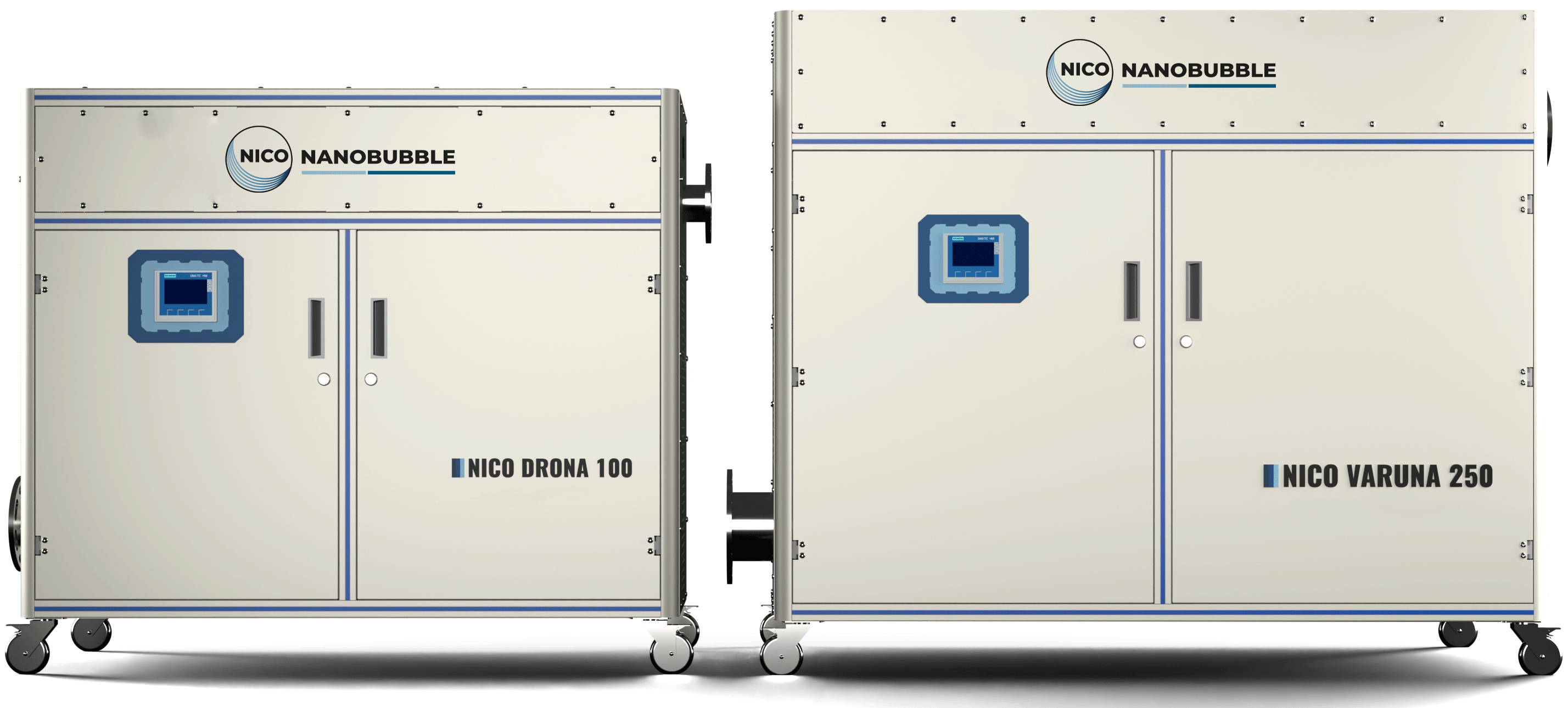
Water is pumped through a side-stream loop, mixed with the selected gas and returned through engineered distribution points. Nanobubbles remain suspended longer than coarse bubbles, increasing the opportunity for gas dissolution.
Design includes pump duty, pressure, gas rate, materials, intake protection, controls and return placement. Performance depends on temperature, solids, wastewater chemistry, tank geometry, retention time and biological conditions.
Aerobic Treatment and Odour
Oxygen Delivery: Air or oxygen nanobubbles can support dissolved-oxygen delivery for aerobic biological processes.
Load-Responsive Operation: Sensor-led controls can align runtime with changing oxygen demand rather than a fixed schedule alone.
Odour Management: Improved oxygen may reduce anaerobic odour formation where oxygen deficiency is the cause.
Retrofit Integration: Side-stream systems may supplement selected basins, lagoons or treatment loops after hydraulic review.
Polishing and Reuse
Ozone nanobubbles may support selected oxidation, colour, odour or disinfection-related objectives after treatability testing. Ozone requires compatible materials, controlled dosing, monitoring, ventilation, off-gas destruction, safety interlocks and trained operation.
Any reuse scheme must be designed and validated for its intended end use. Nanobubbles do not establish recycled-water safety on their own.
Applications
- Activated-sludge and aerobic treatment stages
- Oxidation ditches, basins and lagoons
- Equalisation and selected collection-system duties
- Odour-management treatment loops
- Tertiary polishing after appropriate testing
- Regional and small-community plants
- Research, pilot and retrofit evaluation
Potential Benefits to Evaluate
- More stable dissolved oxygen in selected aerobic zones
- Improved distribution where existing aeration leaves local limitations
- Flexible side-stream retrofits with limited basin disruption
- Controls that respond to measured process demand
- Support for odour management where low oxygen is causal
- Modular pilot and expansion pathways
- Better operating visibility through sensors and data logging
Energy, removal, sludge, odour and compliance outcomes are site-specific. They must be compared against a defined baseline that accounts for flow, load, weather and existing equipment operation.
Small and Regional Plant Considerations
Smaller communities may have lagoons, intermittent loading, limited operator time and long distances to specialist support. A suitable system should be simple to inspect, provide clear alarms and tolerate the expected solids and climate exposure.
Automation can support visibility but does not replace competent operation. Maintenance access, spare parts, calibration, telemetry, emergency response and whole-of-life cost belong in the design review.
From Baseline to Verified Performance
NICO reviews influent and effluent data, diurnal and seasonal flows, loads, tank geometry, aeration, power, controls, receiving environment and consent objectives. A pilot should define sampling, operating conditions and success criteria.
Relevant indicators may include dissolved oxygen, ORP, BOD, COD, nutrients, solids, odour compounds, energy and application-specific contaminants. Nanobubbles do not replace screening, equalisation, solids removal, biological treatment, filtration, disinfection, engagement, risk management or regulatory validation.
The receiving environment matters as much as the treatment tank. Sampling and consent review should reflect whether treated wastewater is discharged to land, freshwater or coastal water, and any pilot must operate within existing approvals.
NICO Nanobubble New Zealand.
helps producers achieve higher stocking densities safely and sustainably.