Precision Oxygen Management for Valuable Stock
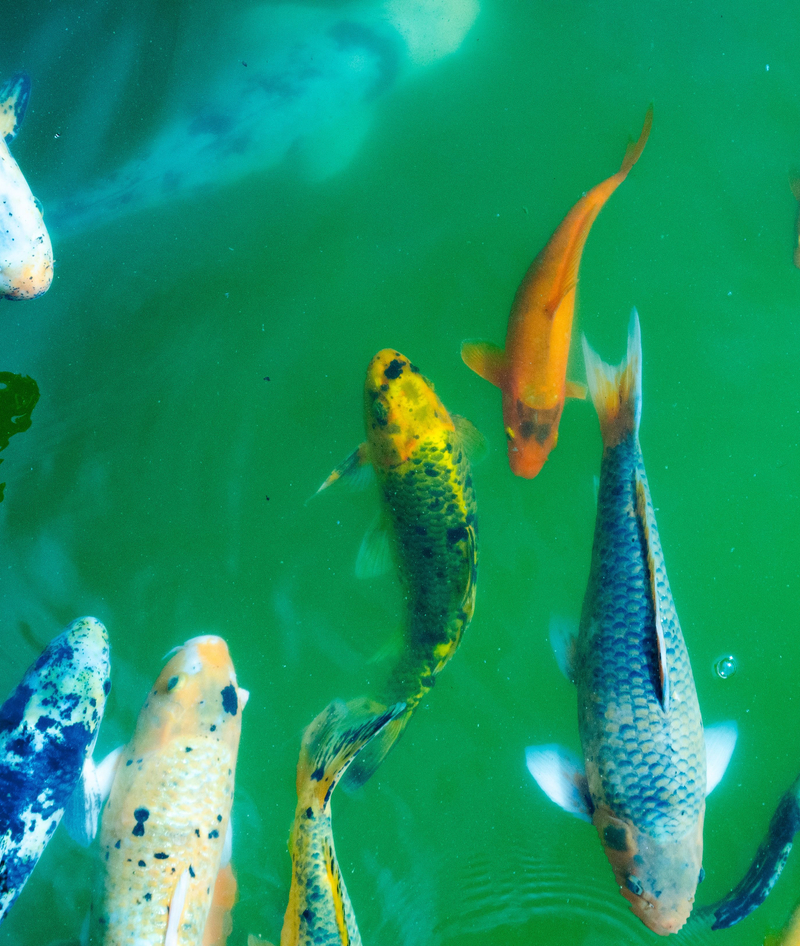
Japan’s aquaculture landscape ranges from freshwater hatcheries and research facilities to marine species, live holding and emerging land-based production. Each system has a different oxygen profile. Early life stages may be especially sensitive, while intensive biomass and warm seasonal water can quickly increase demand.
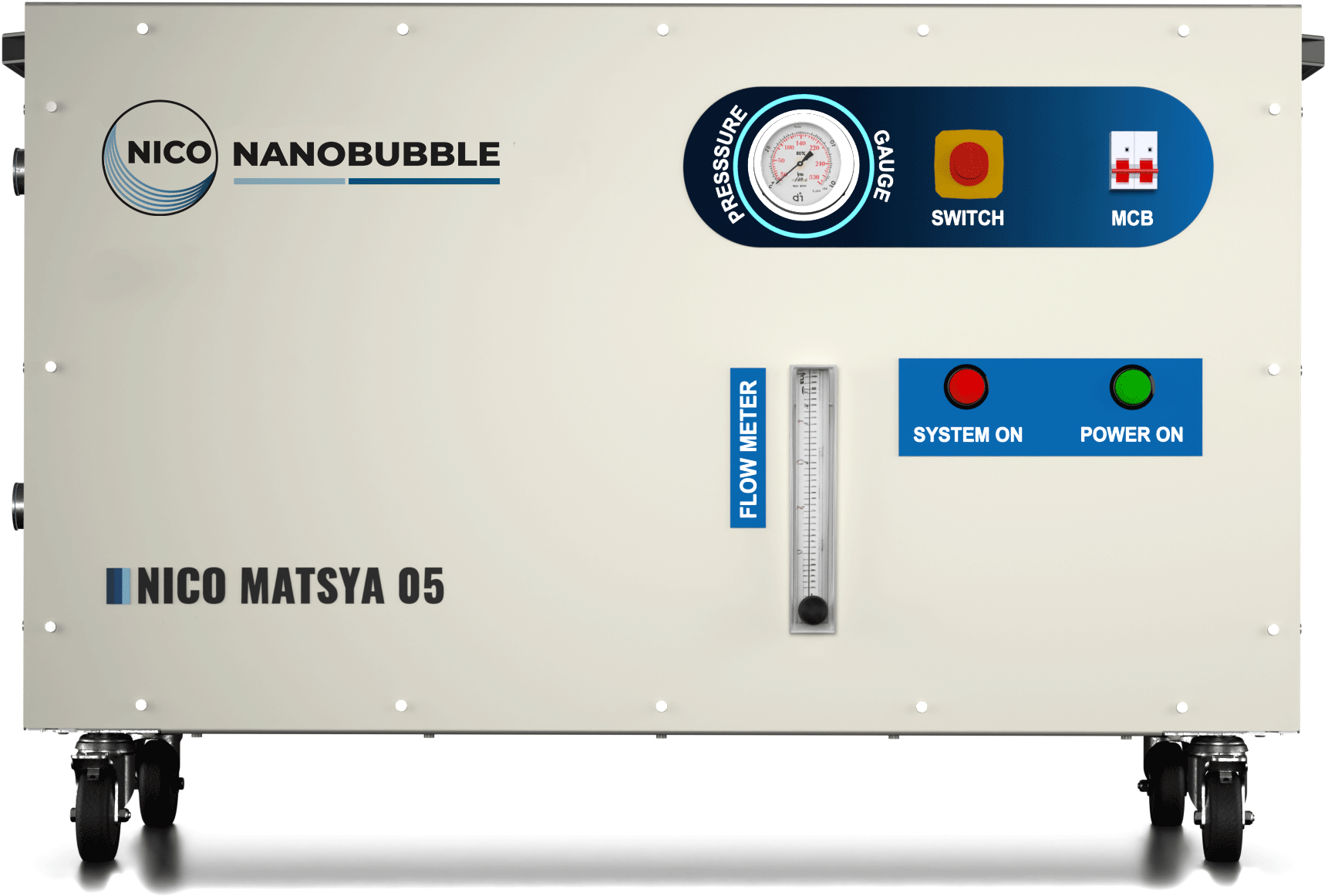
NICO introduces air or oxygen through a designed side-stream loop, returning oxygen-enriched water to selected tanks, raceways, reservoirs or treatment stages.
Common Aquaculture Challenges
- Oxygen demand changing with species, life stage, biomass and feeding
- Seasonal shifts in temperature, salinity and source-water quality
- Uneven dissolved oxygen within tanks, raceways or recirculation loops
- Organic loading from feed, faeces and biofilter activity
- Limited space for equipment and redundancy
- High expectations for alarms, traceability and process control
- Biosecurity boundaries between intake, production and discharge water
How NICO Systems Can Help
Support Oxygen Stability: Extended gas-water contact can increase the opportunity for oxygen dissolution under suitable hydraulic conditions.
Reach Target Zones: Return points can distribute oxygen-enriched water to selected areas rather than relying only on surface aeration.
Integrate with Treatment: Nanobubble loops may operate alongside mechanical filtration, biofiltration, degassing, temperature control and disinfection stages.
Respond to Demand: Sensors and automation can adjust operation around measured oxygen, production schedules and agreed safeguards.
Potential Benefits to Evaluate
- More stable dissolved oxygen during changing production demand
- Targeted delivery within tanks or treatment loops
- Compact side-stream integration where space is constrained
- Greater operating visibility through sensors and data logging
- Modular capacity for pilot, expansion or redundancy
- Support for aerobic biofilter processes where oxygen is limiting
Growth, survival, feed conversion, disease, water-use and energy outcomes are site-specific and must be demonstrated under representative conditions.
Japanese Application Areas
Hatcheries and Nurseries: Closely controlled oxygen delivery for sensitive eggs, larvae, juveniles and broodstock systems.
Land-Based Marine Production: Oxygen management for suitable tanks and recirculating systems producing high-value marine species.
Freshwater Culture: Support for compatible trout, eel and other freshwater production or research facilities.
Live Holding and Transport Preparation: Conditioning selected holding-water systems before distribution, subject to stock and process requirements.
Research and Demonstration Systems: Instrumented installations for universities, institutes and technology-development programmes.
Design Around Species and Facility
Selection begins with species, life stage, stocking density, feeding, water exchange, temperature, salinity, pH, current oxygen profile, flow and emergency requirements. Engineers then review pump duty, gas source, return arrangement, materials, controls, alarms and backup systems.
NICO Nanobubble Japan.
A pilot should define measurement positions, operating periods and biological safeguards before installation. Nanobubbles do not replace solids management, biofiltration, temperature control, disease management, biosecurity or emergency oxygen provision.