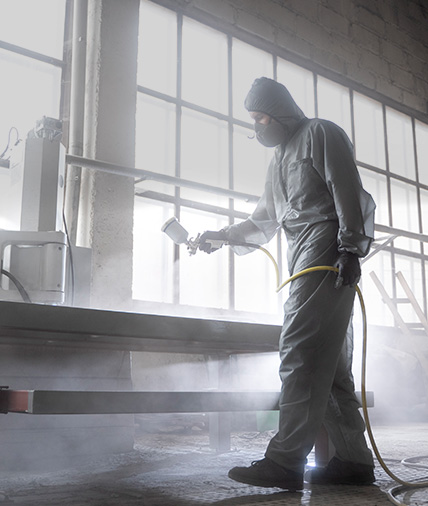
Exploring Ultra-Fine Bubbles for Precision Cleaning
Japanese manufacturing depends on repeatable processes, controlled surface quality and efficient use of water and chemicals. Parts, tools and equipment can carry oils, fine particles, residues or biological films that must be removed without damaging the substrate or compromising the next production stage.
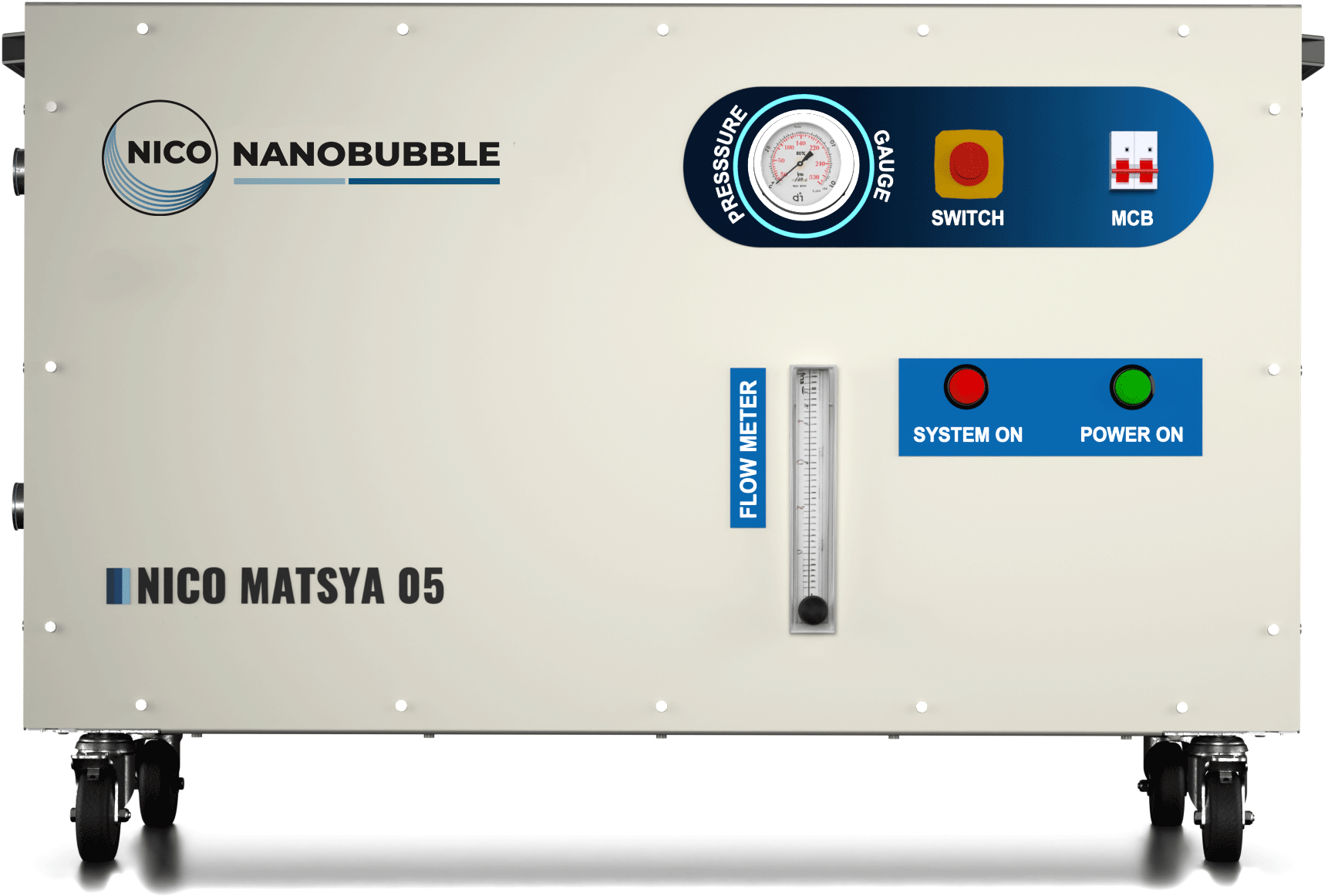
NICO systems can introduce air, oxygen or, where appropriate, ozone nanobubbles into a compatible cleaning or recirculation loop for controlled evaluation.
Common Cleaning Challenges
- Fine particles or films retained in complex geometries
- Variable soil from production, maintenance or handling
- Sensitive metals, coatings, seals and engineered surfaces
- High rinse-water or chemical demand
- Bath contamination and declining cleaning consistency
- Need to protect downstream coating, bonding or assembly
- Strict inspection, traceability and worker-safety requirements
Where Nanobubbles May Fit
Parts and Component Cleaning: Evaluate fine-bubble action in immersion, recirculation or compatible spray-support processes.
Equipment and Tool Maintenance: Assess cleaning of compatible removable tools, components and accessible process surfaces.
Water-Based Rinsing: Explore whether treated rinse water can assist removal while maintaining the required surface condition.
Ozone-Assisted Applications: Evaluate controlled oxidation only where materials, residues, ventilation and worker-safety requirements permit.
What Determines Suitability
Cleaning performance depends on the contaminant, surface material, roughness, component geometry, water chemistry, temperature, chemistry, agitation, contact time and the cleanliness specification. Nanobubbles must be assessed as one part of the cleaning mechanism.
Air or oxygen may be preferred for non-oxidative trials. Ozone can react with organic material but may also affect polymers, elastomers, coatings, metals or downstream chemistry. A material-compatibility and hazard review is required before testing.
Potential Benefits to Evaluate
- Improved removal of selected fine particles, films or residues
- Reduced water or chemical use where testing demonstrates equivalence
- Compact side-stream integration with compatible cleaning baths
- More consistent bath conditions through circulation and monitoring
- Potential support for lower-temperature or shorter processes
- Modular trials before production-scale investment
No reduction in chemicals, water, time or defects should be claimed without controlled comparison against the current cleaning method.
Pilot and Validation Approach
Begin with representative parts and a defined soil. Agree the cleanliness endpoint-such as gravimetric residue, particle count, contact angle, microscopy, ionic contamination, visual standard or downstream adhesion result. Establish the existing process baseline, including water, chemicals, temperature, time and energy.
The trial should vary one factor at a time where practical and include untreated controls. Engineers should review pump and mixer compatibility, filtration, bath turnover, gas handling, off-gas, corrosion, residue capture and disposal.
Production adoption requires repeatability across batches, not a single visually clean sample. The validated process must also protect dimensions, coatings, seals and downstream manufacturing requirements.
Safety and Integration
Cleaning systems require guarding, electrical protection, operator procedures, maintenance access and safe chemical handling. Ozone configurations additionally need generation controls, leak monitoring, ventilation, off-gas destruction and suitable materials.
NICO Nanobubble Japan.
Nanobubble cleaning does not replace risk assessment, filtration, waste management, inspection or relevant Japanese workplace and environmental requirements.