Oxygen Management Around the Species and System
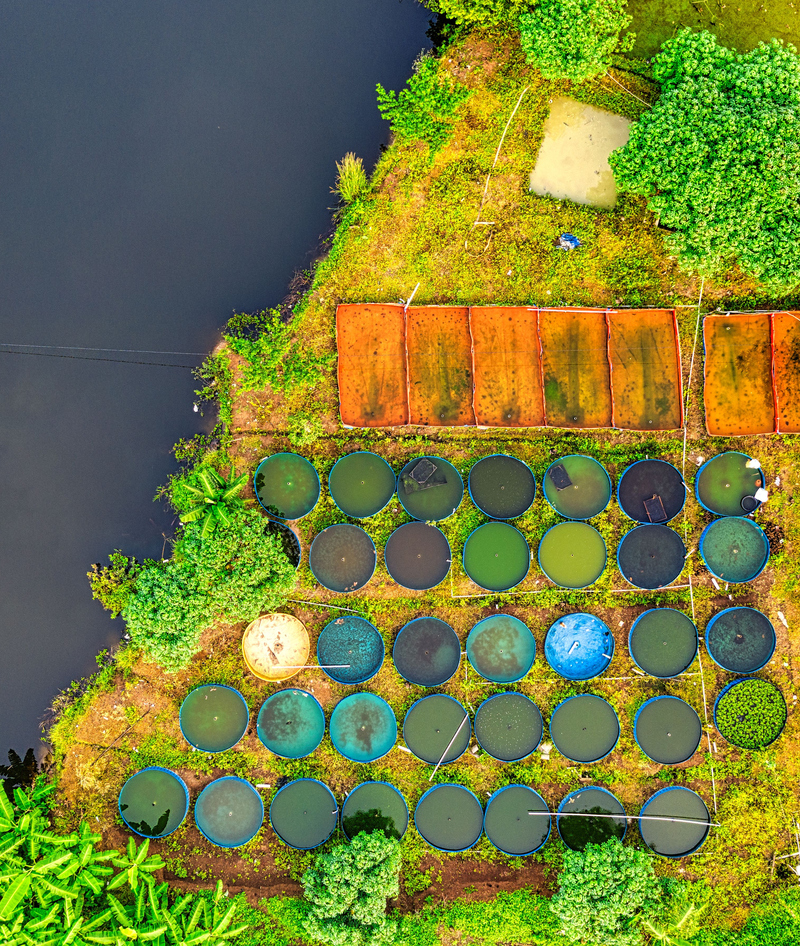
Malaysian aquaculture spans freshwater production and saline environments, with different tank, pond and hatchery arrangements. A freshwater fish pond and a marine hatchery cannot share the same oxygenation assumptions.
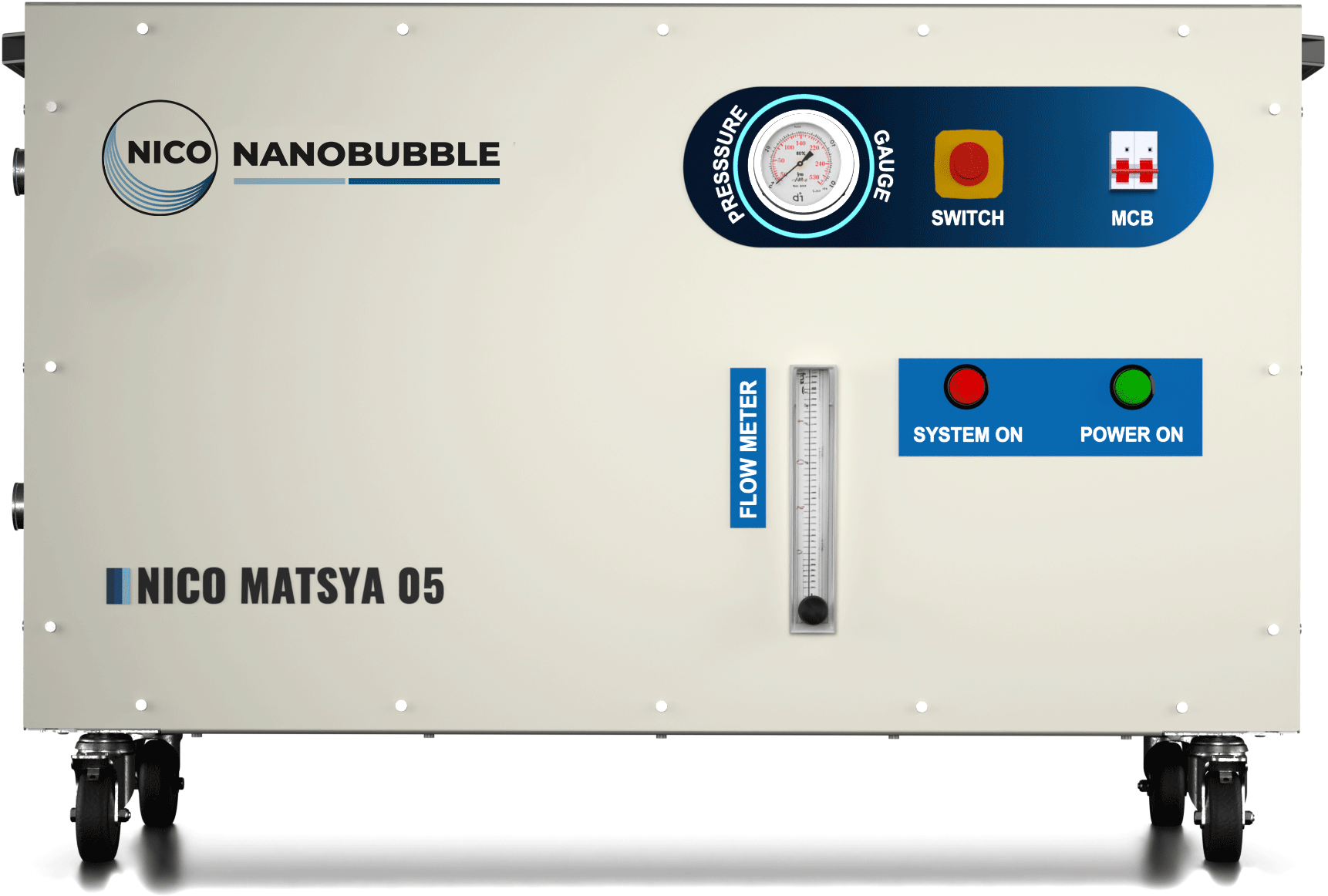
NICO systems introduce air or oxygen through a compatible loop, returning oxygen-enriched water to a selected zone. The design should reflect stock requirements, salinity, temperature, biomass and circulation throughout the production cycle.
Common Aquaculture Challenges
- Increasing oxygen demand as stock grows and feeding rises
- Low overnight oxygen in biologically active ponds
- Warm water and variable salinity
- Uneven conditions between inlet, outlet and deeper zones
- Organic material from feed, waste and plankton
- Sensitive hatchery life stages
- Need for reliable backup systems and alarm response
How Nanobubbles May Help
Supplement Oxygen Delivery: Assess additional gas transfer where monitoring shows a shortfall in the current arrangement.
Improve Distribution: Position treated-water returns around tank or pond circulation. An outlet reading does not represent the whole production volume.
Integrate with Water Treatment: Coordinate oxygenation with solids removal, biofiltration, temperature control and carbon-dioxide management where required.
Follow Changing Demand: Use appropriate monitoring and operating schedules while preserving independent stock-protection measures.
Potential Benefits to Assess
- More consistent oxygen in the intended treatment zone
- Better visibility of night-time and feeding-related changes
- Compact integration with selected water loops
- Modular assessment before wider deployment
- Control settings informed by actual demand
Growth, survival, feed conversion, disease and energy outcomes require their own evidence. Improved oxygen does not automatically establish any of these benefits.
Malaysian Application Areas
Freshwater Fish Production: Assess suitable tilapia, catfish and other freshwater systems according to stocking, flow and pond management.
Marine and Brackish-Water Facilities: Evaluate compatible shrimp or marine finfish tanks, ponds and holding systems, with materials selected for saline exposure.
Hatcheries and Nurseries: Define safeguards for eggs, larvae and juveniles before testing a change to water treatment.
Recirculating Systems: Integrate with the complete treatment loop and biofilter oxygen demand. Preserve biosecurity boundaries and existing life-support functions.
Match the Trial to the Facility
Provide species, life stage, biomass, feeding, water exchange, temperature, salinity and oxygen records. Measure representative times and depths, including expected minimum oxygen periods.
Maintain emergency aeration and avoid excessive gas supersaturation. Open-water cage applications require a separate assessment because treated water may disperse rapidly. Results from an enclosed tank should not be extrapolated to coastal grow-out.
NICO Nanobubble Malaysia.
Define biological safeguards and acceptance criteria before starting. The system must work alongside hygiene, filtration, feeding discipline and competent farm management.