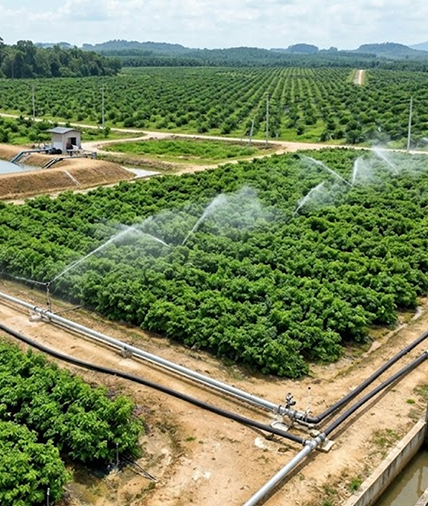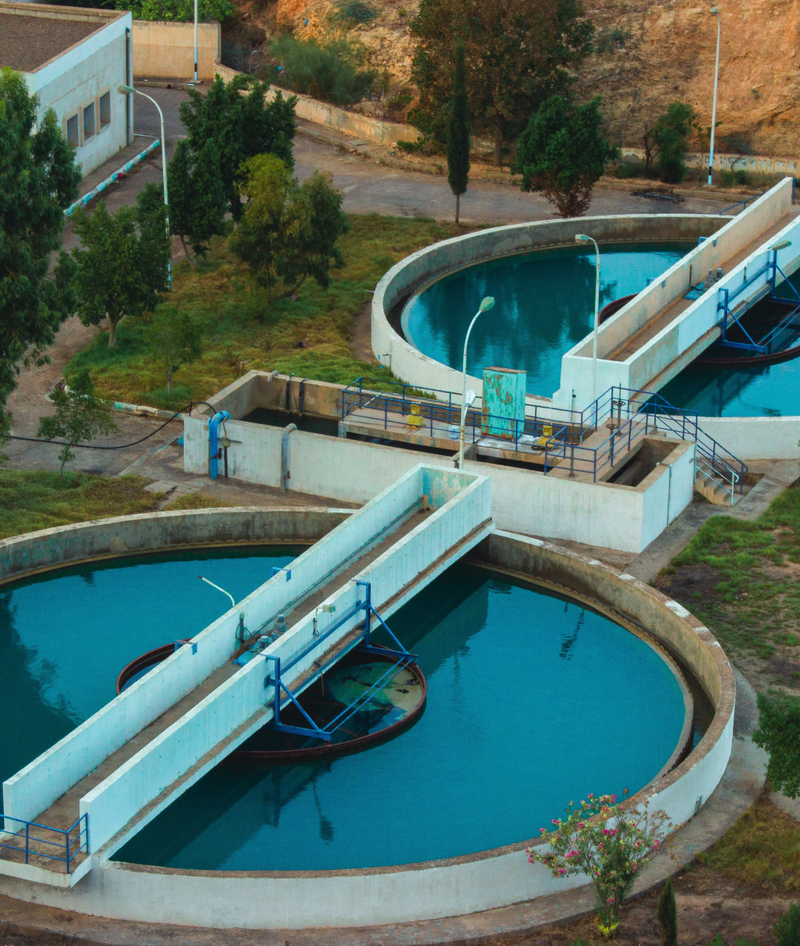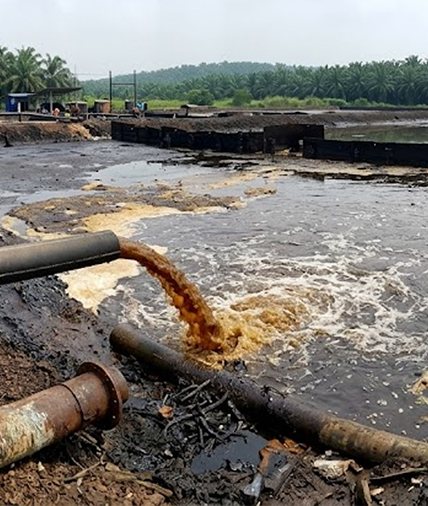
Strengthen the Right Stage of the Mill Treatment Process
For Malaysian palm-oil mills, final-effluent performance depends on how the entire treatment train operates. Cooling, solids and oil management, biological treatment and polishing each address different requirements.
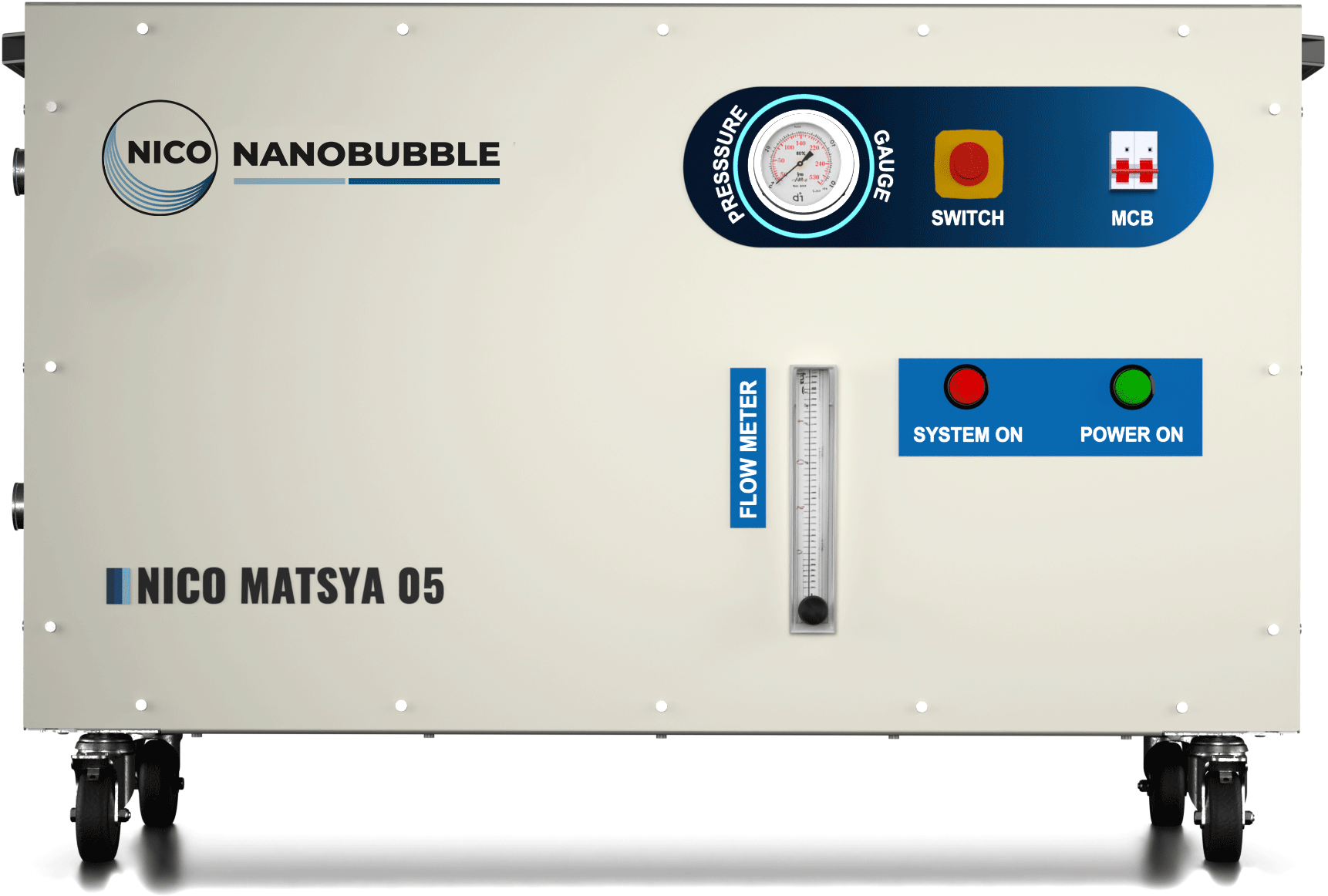
NICO nanobubble oxygenation can be evaluated for suitable aerobic stages where additional gas transfer may help. The starting point is the condition of water reaching that stage, not the assumption that one generator can treat every part of the mill’s effluent stream.
Common Treatment Challenges
- Changes in effluent flow and organic loading with mill throughput
- Residual solids and oil affecting downstream equipment
- Inadequate oxygen distribution in aerobic basins
- Variable upstream biological performance
- Sludge accumulation and reduced effective treatment volume
- Odour associated with poorly controlled process conditions
- Limited space or access for a retrofit
- Need for representative final-effluent and operating data
Understand the Treatment Boundaries
Upstream Conditioning: Review temperature, oil, solids and pH before deciding where a side-stream unit can operate. Untreated or inadequately conditioned effluent may not suit the proposed equipment or biological stage.
Anaerobic Treatment and Biogas: Digesters and covered anaerobic lagoons serve a different function from aerobic treatment. Do not introduce oxygen as a routine modification to these units. Any change needs specialist process and gas-safety assessment.
Aerobic Treatment: Air or oxygen nanobubbles may supplement oxygen delivery after upstream load reduction, subject to the process biology, retention time and hydraulic arrangement.
Final Polishing: Define what remains to be treated. Additional oxygen alone may not address colour, non-biodegradable compounds or solids that need another removal mechanism.
How a NICO System Can Fit
Target a Measured Limitation: Use oxygen profiles and loading data to establish whether poor gas transfer is contributing to inconsistent performance.
Design the Recirculation Loop: Match pump duty, intake protection and return points to the basin. Avoid short-circuiting or excessive disturbance of settled solids.
Coordinate Existing Equipment: Retain essential mixing and process functions. A reduction in aerator runtime must not unintentionally reduce suspension or circulation.
Monitor Relevant Conditions: Connect operating schedules with representative dissolved oxygen, flow and loading information. Sensor care and sampling methods are part of the design.
Potential Improvements to Evaluate
- More stable oxygen in a defined aerobic zone
- Better support for biodegradable-load treatment where oxygen is limiting
- Greater visibility of load-related operating changes
- Retrofit integration with selected existing infrastructure
- A measurable basis for staged investment
Treatment efficiency, energy savings, sludge reduction and discharge performance remain site-specific. They require comparison with a representative baseline, not a single final-effluent sample.
Assess Polishing Separately
If ozone is considered, establish oxidant demand, dose, contact conditions, residuals, by-products and downstream effects. Material compatibility, ventilation, exposure protection and off-gas handling must be addressed.
No oxidation process should be described as guaranteeing compliance or zero discharge. Final water quality depends on the complete treatment arrangement and the intended outlet or reuse duty.
Build the Baseline
Gather stage-specific flow, BOD, COD, solids, oil and grease, pH, temperature and oxygen data. Record mill throughput, upstream performance, sludge handling and existing equipment use.
Calculate pollutant load as well as concentration. Changes in water use can dilute a sample without reducing the mass entering the treatment plant. Maintain the same sampling and analytical approach during the trial.
Trial Before Expansion
Agree a pilot duration that captures relevant production variation. Compare complete-system energy, operating reliability and treatment indicators under similar conditions.
The final review should identify remaining bottlenecks, maintenance needs, controls and realistic scale-up requirements. Nanobubbles complement mill effluent management; they do not replace upstream treatment, laboratory verification or operator responsibility.