Enhancing COD Removal, Treatment Stability and
Energy Efficiency Through a Retrofit-Friendly Solution
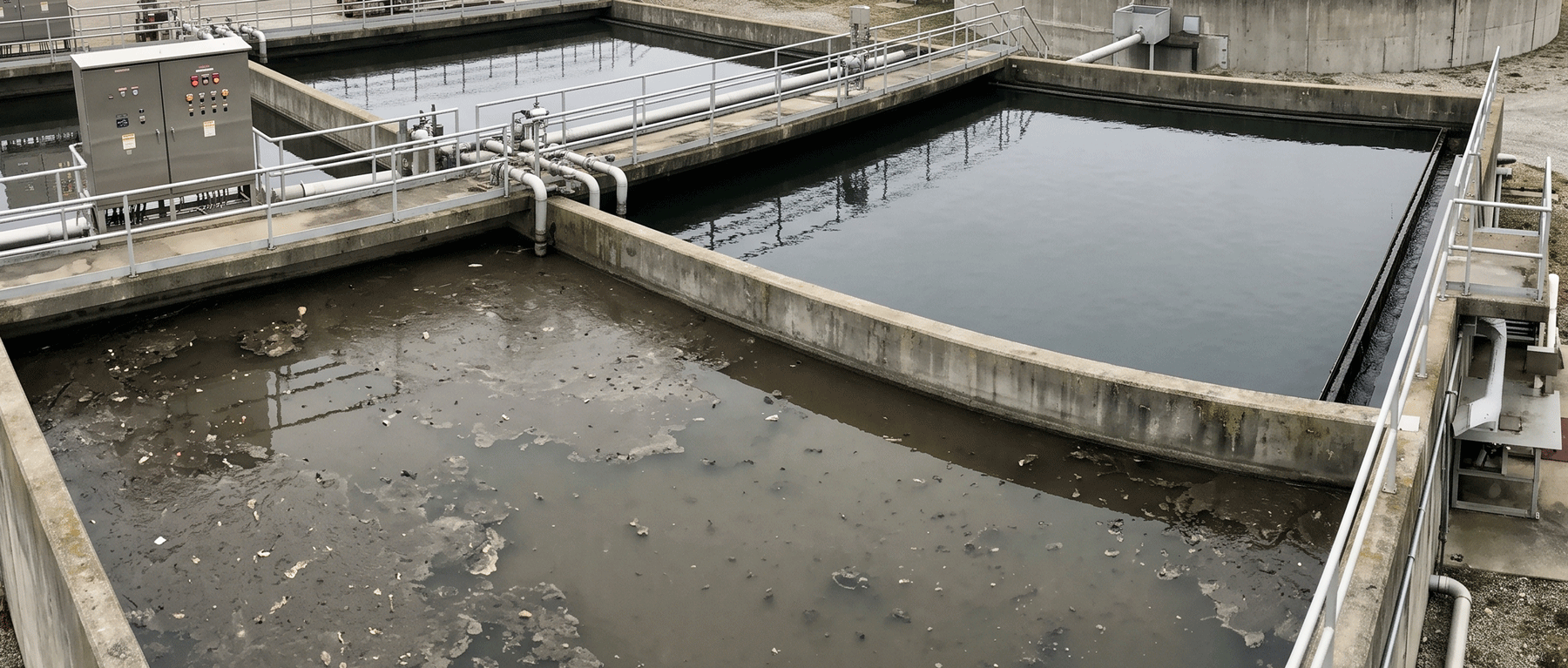
An existing industrial Effluent Treatment Plant was evaluated for performance enhancement through a nanobubble ETP retrofit using NICO Ozonated Nanobubble Technology as a pre-treatment solution. While the existing biological treatment system was achieving substantial organic-load reduction, the final effluent continued to contain slowly biodegradable, colloidal, and refractory organic compounds that are difficult to remove through conventional biological treatment alone.
NICO proposed a retrofit-based ozonated nanobubble treatment system to enhance oxidation, improve biodegradability, strengthen downstream biological activity and reduce overall treatment burden and energy demand associated with conventional aeration.
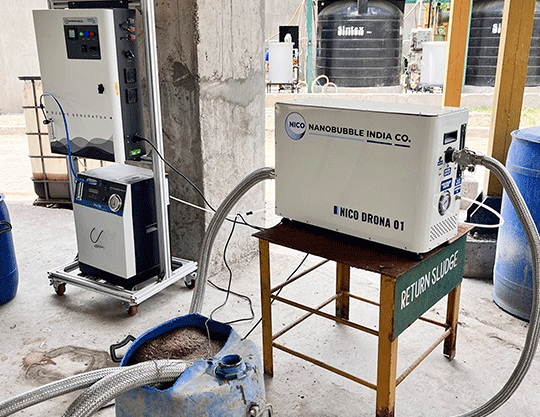
The proposed system was designed as an upgrade to the existing treatment infrastructure, minimizing the requirement for major civil modification or interruption of plant operations.
Prior to the proposed integration, the existing biological process was effective in removing readily biodegradable compounds. However, the remaining COD was primarily associated with slowly biodegradable organic matter, colloidal and particulate contaminants, residual biomass, suspended solids and refractory or inert soluble compounds.
These fractions limited the plant's ability to consistently achieve deeper COD reduction. Increasing conventional aeration alone would increase power consumption without proportionately improving final-effluent quality, as conventional biological treatment has limited ability to directly break down complex, high-molecular-weight and non-biodegradable organic compounds.
The client therefore required a solution capable of achieving deeper treatment performance without constructing additional large treatment units or significantly modifying the existing hydraulic arrangement.
NICO proposed a side-stream ozonated nanobubble generator system combining advanced oxidation with enhanced biological treatment.
Wastewater is withdrawn from the primary treatment stage, enriched with ozone nanobubbles and returned through a strategically designed circulation loop to the extended aeration tank. The high gas–liquid interfacial area of nanobubbles enables effective ozone dispersion and contact with the wastewater.
The process targets slowly biodegradable, colloidal and refractory organic fractions through oxidation, while partially converting complex contaminants into smaller, more biologically treatable compounds. This enhances downstream biological polishing, supports further reduction of residual soluble COD and improves final-effluent quality.
| Performance Indicator | Before NICO Ozonated Nanobubble Integration | After NICO Ozonated Nanobubble Integration | |
|---|---|---|---|
| COD After Primary Biological Treatment | >150 mg/L | <100 mg/L | |
| Final Treated COD | 90-110 mg/L | 40-50 mg/L | |
| Overall COD Removal | 80-90% | 90-95% | |
| Additional COD Reduction | - | 40-70 mg/L | |
| Deep COD Polishing | Limited | High |
The projected results indicate that ozonated nanobubbles can substantially reduce residual organic load and support final COD levels around or below 50 mg/L, subject to wastewater characteristics and operating conditions.
The integration also supported improved effluent clarity, reduction in color and odor, lower refractory organic content and more stable biological activity under varying influent conditions.
The ozonated nanobubble system is designed to provide deeper treatment beyond conventional biological processes, targeting the residual organic fraction that is difficult to remove through aeration alone.
By combining advanced oxidation with enhanced biological treatment, the system improved overall COD removal from approximately 80–90% to 90–95%.
The proposed integration reduced the operating burden on conventional aeration systems through improved gas-transfer efficiency and strategic blower optimization, with the potential for approximately 40–50% reduction in overall treatment energy consumption, depending on actual operating conditions.
The ozonated nanobubble system provides a combined oxidation and biological-intensification pathway, addressing both biodegradable and partially non-biodegradable organic fractions. This can improve oxidation of difficult compounds, reduce organic shock loading on downstream biological stages and support more consistent treated-water quality.
From an energy perspective, the system can support lower blower operating hours, reduced aeration-related maintenance and improved energy utilization per unit of COD removed.
The retrofit-oriented approach also offers an alternative to constructing additional biological or tertiary treatment infrastructure. Potential commercial benefits include reduced operating expenditure, lower chemical consumption, improved compliance reliability and avoidance or deferral of major civil expansion.
The original technical assessment indicated an estimated payback period of approximately four to five years, depending on system size, electricity tariff, operating schedule and chemical savings.
The assessment demonstrates that NICO Ozonated Nanobubble Technology can provide an effective upgrade pathway for industrial ETPs that are already performing satisfactorily but require deeper COD reduction.
By combining advanced oxidation, enhanced biodegradability and biological polishing, the technology can potentially reduce treated COD from approximately 90–110 mg/L to 40–55 mg/L, while supporting energy optimization and reduced chemical dependency.
The solution provides a compact, scalable and retrofit-friendly approach for improving effluent quality, strengthening process stability and enhancing the environmental and economic performance of existing industrial treatment plants.