Maximize the potential of your broiler and layer chicken farms with the benefits of NICO Nanobubble oxygenated water. It is well known that underground water sources commonly used in poultry farming often have low dissolved oxygen (DO) levels. By supplementing your birds' water with NICO Nanobubble oxygen-infused water, you can significantly improve feed efficiency, achieving up to a 32% increase. This enhancement in feed efficiency can lead to a substantial 12% reduction in feed costs, directly benefiting your bottom line.
High levels of dissolved oxygen improve water quality by reducing or eliminating harmful gases, minerals, and pathogens. This improvement supports a healthier environment for your birds, promoting better overall well-being.
NICO VANTA for Poultry Drinking-Water Management
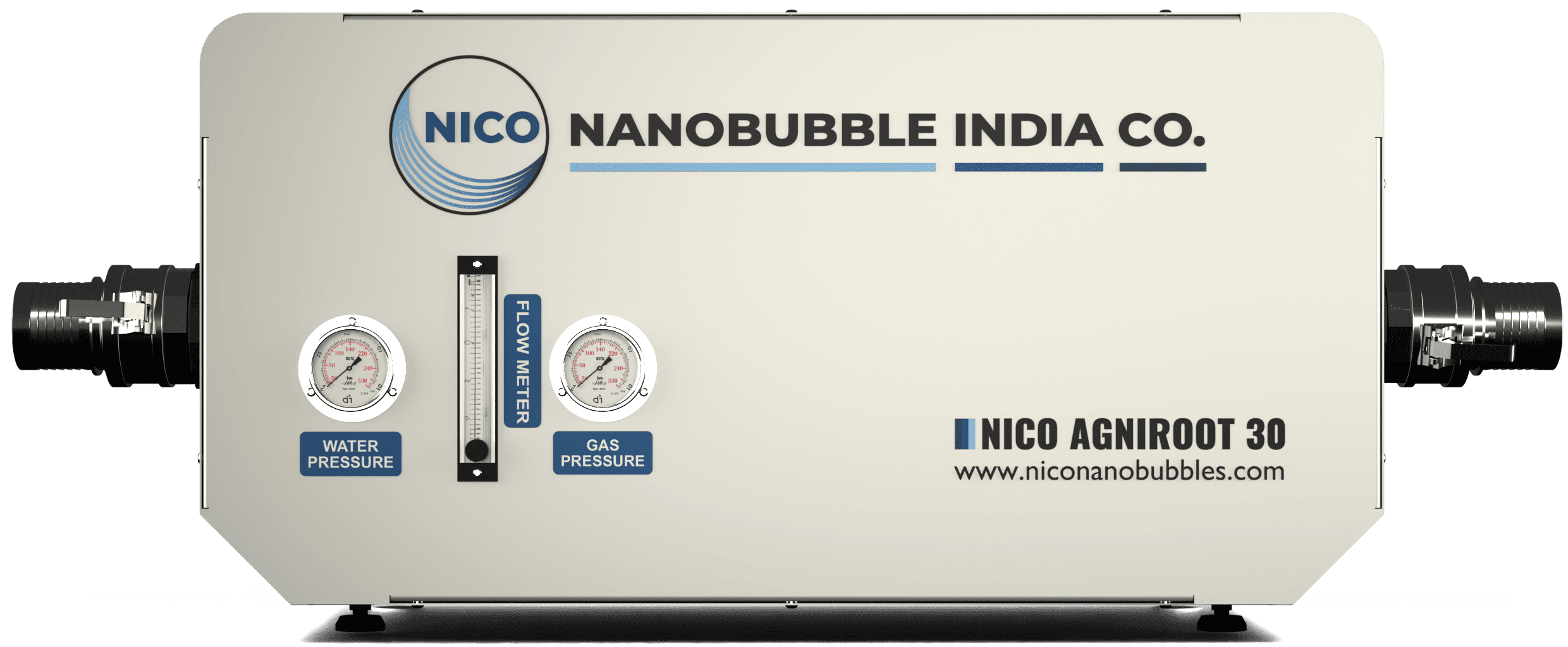
NICO VANTA is a precision gas-management system designed to support gas transfer and water-treatment applications. In poultry farming, nanobubble technology can be integrated into suitable drinking-water systems to increase dissolved oxygen availability and support consistent water quality. By improving gas transfer, NICO VANTA can help poultry farms optimise water-management practices for broiler, layer, and breeder operations. The system can be evaluated for integration with existing water-storage tanks, supply lines, and drinking-water infrastructure, depending on farm requirements and water quality. Appropriate configuration and operating conditions are important for achieving the intended dissolved oxygen levels and maintaining water quality throughout the distribution system.
Benefits of Nanobubbles in Poultry Farming
- 10% reduction in mortality rates
- 15% increase in hatchability
- 15% reduction in veterinary expenses
- 20% reduction in water treatment costs
- 30% reduction in environmental compliance costs
- Reduced incidence of respiratory diseases and stress
- 12% increase in weight gain due to better nutrient absorption
- Enhancing dissolved oxygen levels promotes better health
- Ozone NICO Nanobubbles help sanitize the incubation environment
Improved Drinking-Water Quality and Farm Hygiene
Water quality is essential for poultry health, feed utilization, and consistent production performance. Nanobubble technology can support drinking-water management by improving gas transfer and, where appropriately configured, supporting oxidation-based treatment. Oxygen nanobubbles and ozone nanobubbles serve different purposes: oxygen is used to enhance oxygen availability, while ozone can support disinfection and oxidation in suitable treatment applications. Ozone treatment must be appropriately controlled, and residual ozone must not expose birds to unsafe concentrations.
Applications Across Poultry Operations
NICO nanobubble systems can be evaluated for a range of poultry-farming applications, including drinking-water oxygenation, water-storage and distribution management, and treatment of suitable water streams. In hatcheries, ozone-based treatment may also be considered for appropriate water and environmental sanitation applications, subject to the required disinfection protocol and safety controls. For breeder and layer birds, additional oxygen is crucial for enhancing metabolism and effectively assimilating high-energy feeds. Oxygen supplementation has been shown to improve critical blood parameters, such as triglycerides, total cholesterol, and low-density lipoprotein cholesterol. Moreover, it significantly boosts the generation of essential globulins, including IgG and IgM, in broiler chickens. Invest in NICO Nanobubble oxygenated water for your poultry farm and witness the benefits of improved metabolism, enhanced immune response, and optimized feed utilization. Ensure your birds thrive in a healthier, more productive environment.
Optimize Your Poultry Farm with NICO VANTA
Explore how NICO VANTA can be configured for your poultry operation's water-treatment and gas-transfer requirements. Contact NICO Nanobubbles to discuss your source-water quality, farm capacity, drinking-water infrastructure, and treatment objectives.