Tackling Algal Growth at Scale: NICO’s Nanobubble
Treatment at Bangla Sahib Sarovar
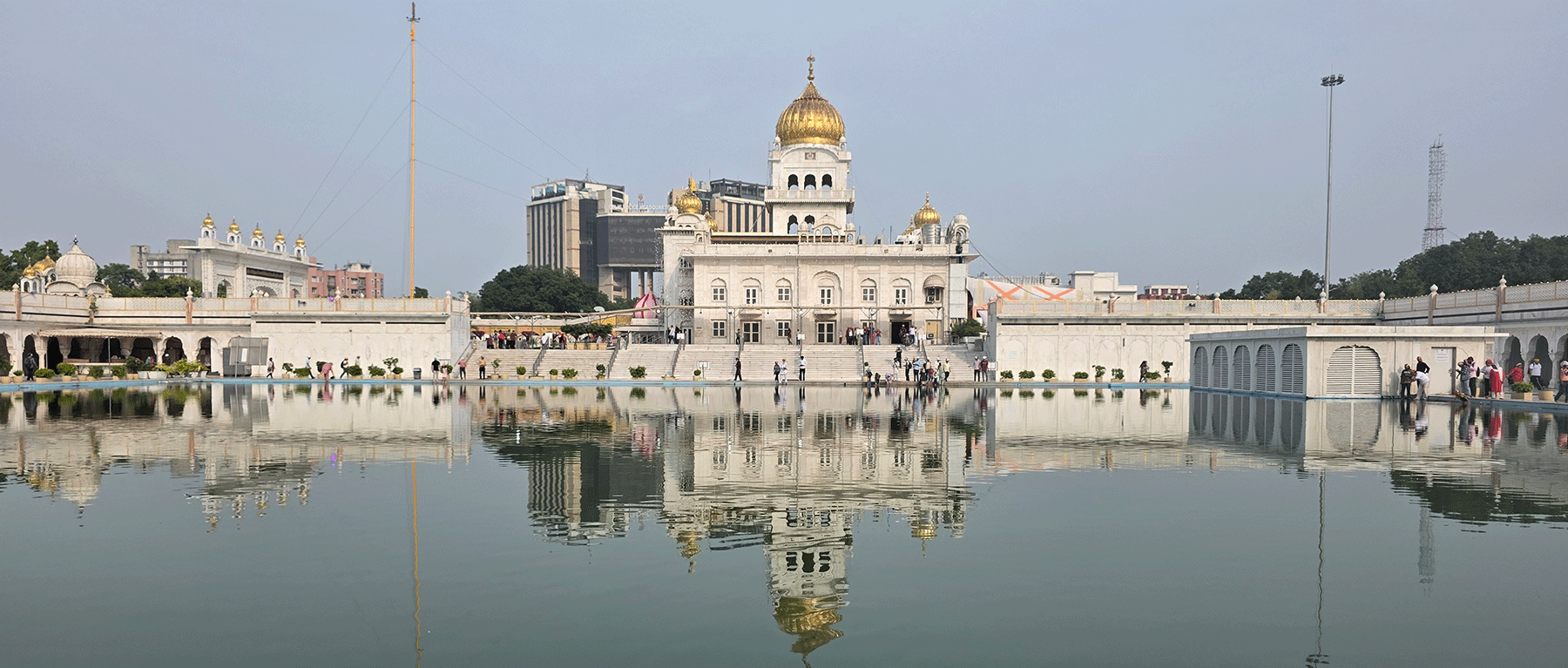
Gurdwara Bangla Sahib, located in the heart of New Delhi, is one of the city's prominent religious landmarks and is known for its historic significance and iconic Sarovar. Maintaining the water quality of such a significant water body is important not only from an environmental perspective, but also for preserving the cleanliness and overall experience of the site.
The Sarovar at Gurdwara Bangla Sahib is approximately 200 ft × 200 ft × 12 ft, with an estimated water volume of approximately 1.35 crore litres, depending on the effective water depth and operating level.
NICO Nanobubble India Co. deployed a VARUNA 30 Nanobubble Generator System to support water-quality improvement and address algae-affected conditions through combined oxygen and ozone nanobubble treatment.
The system was installed and commissioned on 1 July 2026, with treatment operations commencing from 2 July 2026.
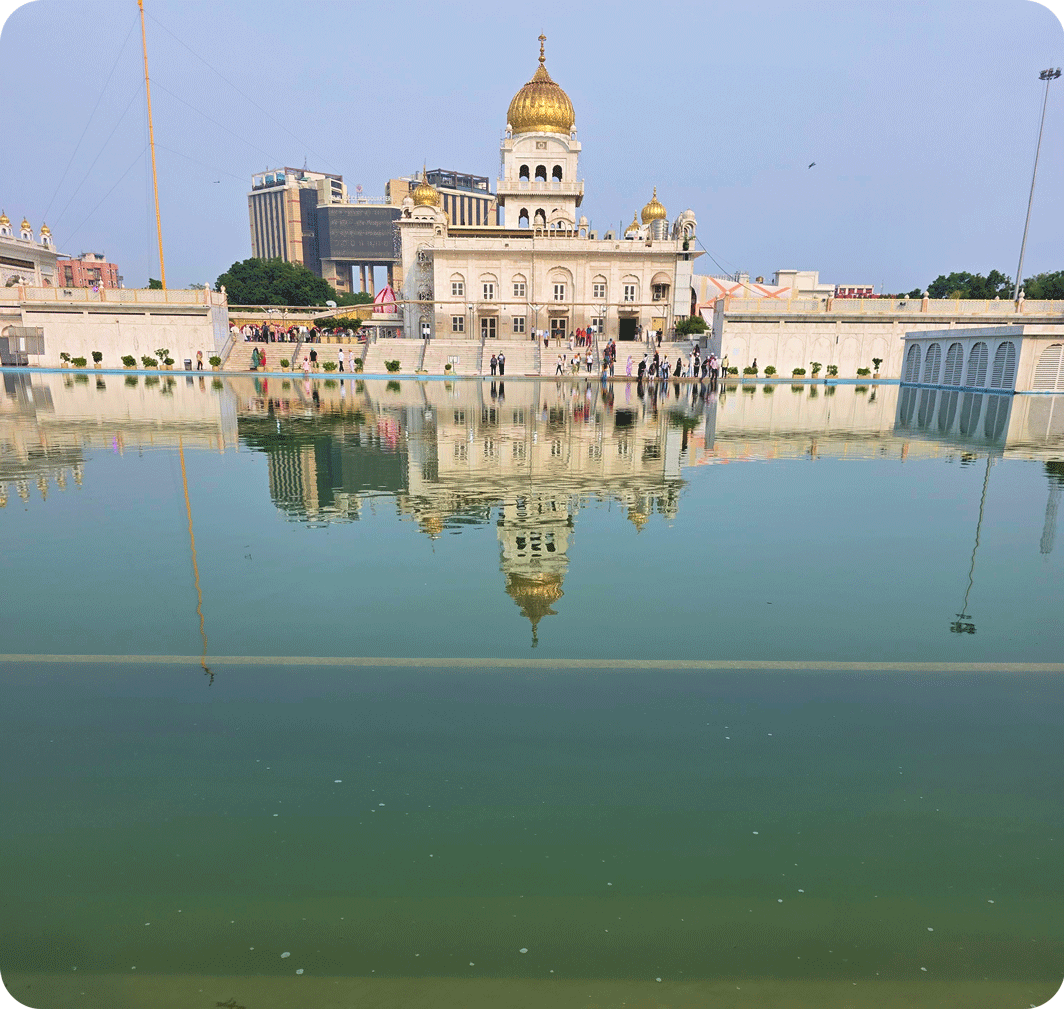
The system was designed as an in-situ water-treatment solution, allowing treatment to be carried out within the existing Sarovar without reconstruction or major civil modification.
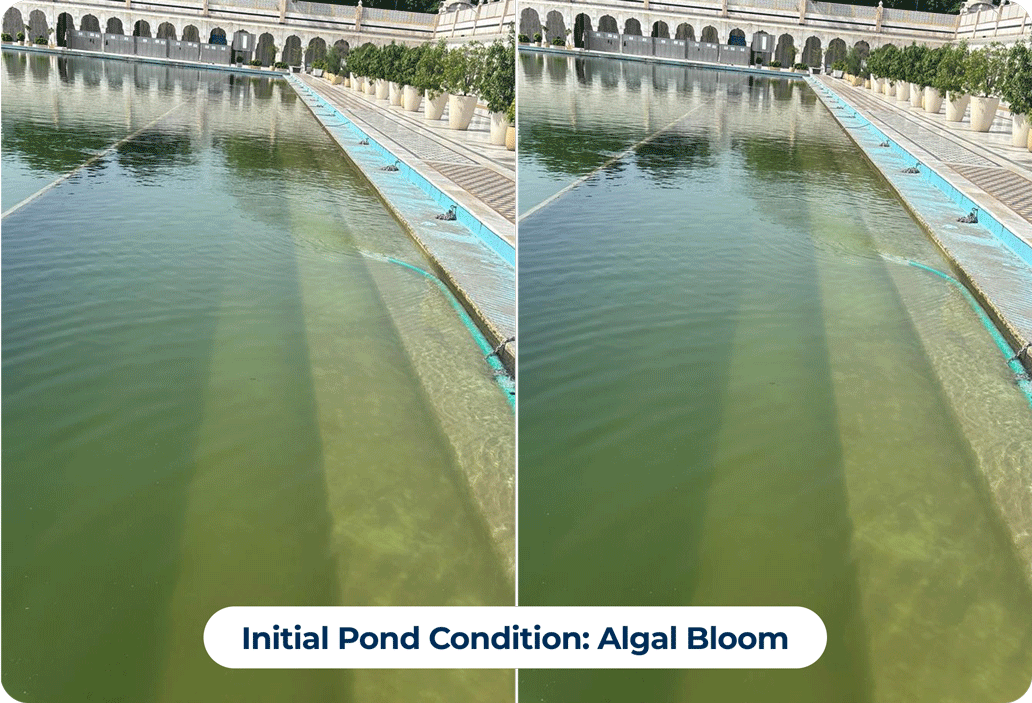
The primary objective of the project was to address algae-affected water conditions within the existing Sarovar and improve the overall water-quality environment.
With an estimated water volume of more than 1 crore litres, the treatment approach needed to work within the existing water body while enabling effective gas transfer, water circulation, and treatment coverage across the Sarovar. Rather than relying on reconstruction or major civil intervention, the project focused on integrating a nanobubble-based treatment system with the existing water body and progressively improving water-quality conditions through oxygenation and ozone treatment.
The initial dissolved oxygen condition recorded during the trial was approximately 7 mg/L.
NICO installed the VARUNA 30 Nanobubble Generator near the Sarovar and configured the system for combined oxygen and ozone nanobubble treatment.
The system uses nanobubbles typically measuring less than 200 nm, enabling efficient gas–liquid transfer and dispersion of the treatment gases into the water.
The treatment process combined:
The oxygen nanobubbles were used to enhance dissolved oxygen conditions, while ozone nanobubbles provided an oxidative treatment mechanism to support the control of algae-affected water conditions. The system was integrated with the existing Sarovar environment to enable continuous circulation and progressive treatment of the water body.
Water-quality measurements recorded before and after nanobubble treatment demonstrated improvements across key parameters, including dissolved oxygen, COD, BOD, and TOC.
| Performance Indicator | Unit | Before Nanobubble | After Nanobubble* | |
|---|---|---|---|---|
| BOD for 3 Days @ 27°C | mg/L | 7.2 | 4.8 | |
| COD | mg/L | 60 | 19.8 | |
| Dissolved Oxygen (DO) | mg/L | 7.0 | 14.0 | |
| Total Organic Carbon (TOC) | mg/L | 15.9 | 10.6 |
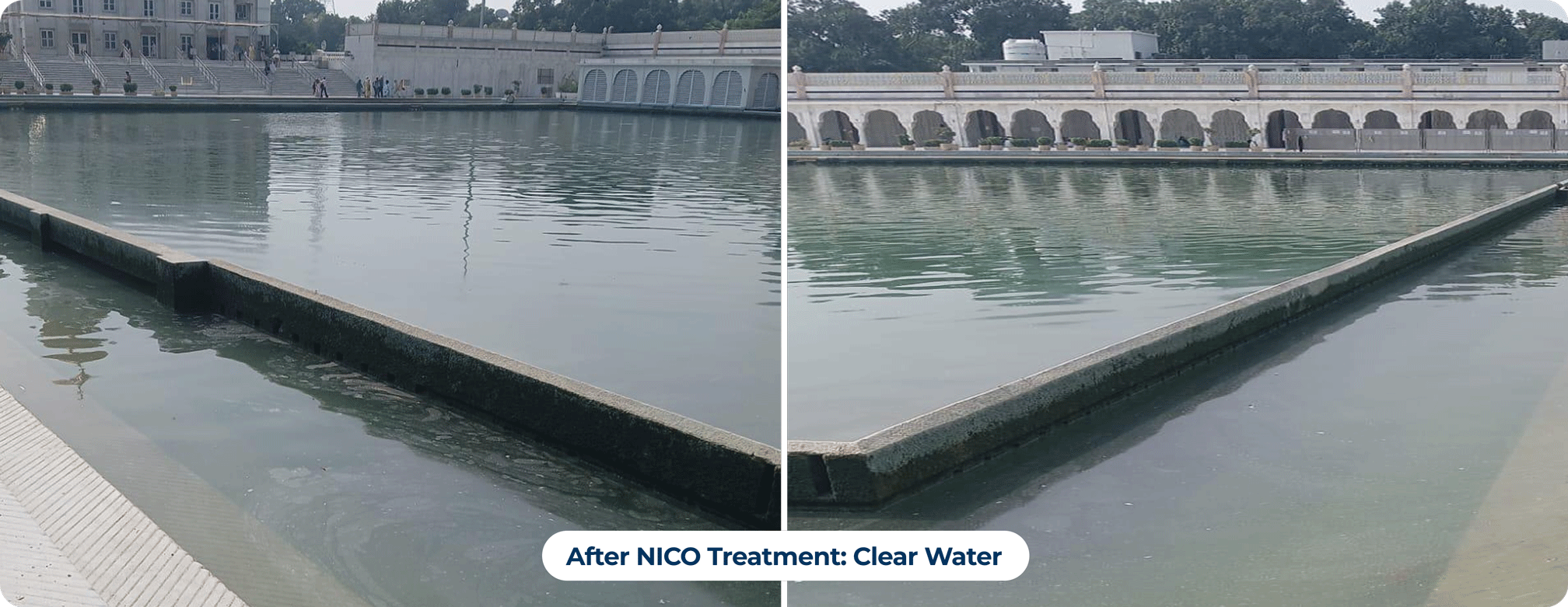
The results indicate a substantial improvement in dissolved oxygen availability, with measured DO reaching approximately 14 mg/L at the monitored locations. Reductions were also observed in COD, BOD, and TOC, indicating an improvement in the measured water-quality parameters following treatment.
Dissolved oxygen increased from approximately 7.0 mg/L to 14.0 mg/L in the reported measurements, demonstrating enhanced oxygen availability within the treated water.
COD decreased from 60 mg/L to 19.8 mg/L, representing an approximately 67% reduction in the reported measurements.
BOD for 3 Days at 27°C decreased from 7.2 mg/L to 4.8 mg/L, representing an approximately 33% reduction.
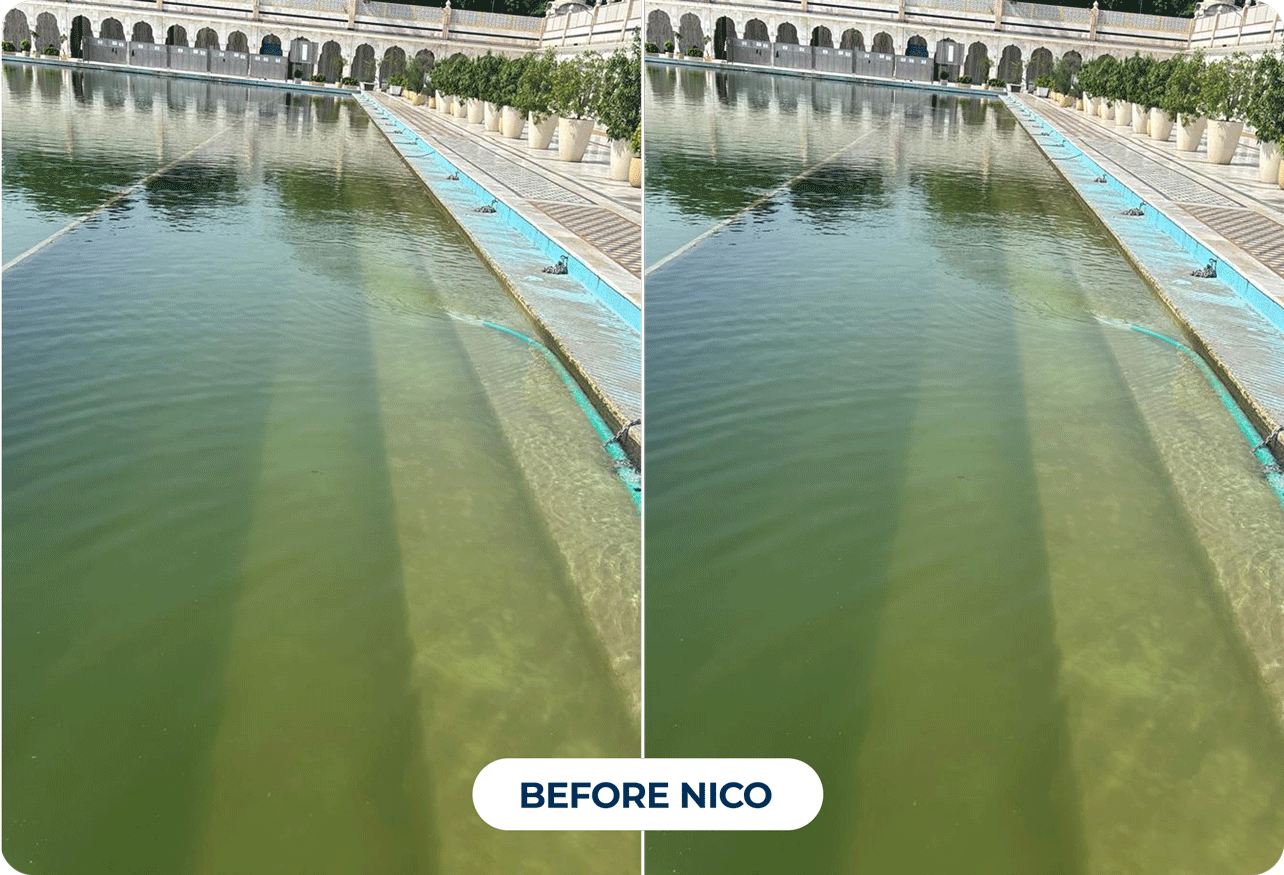
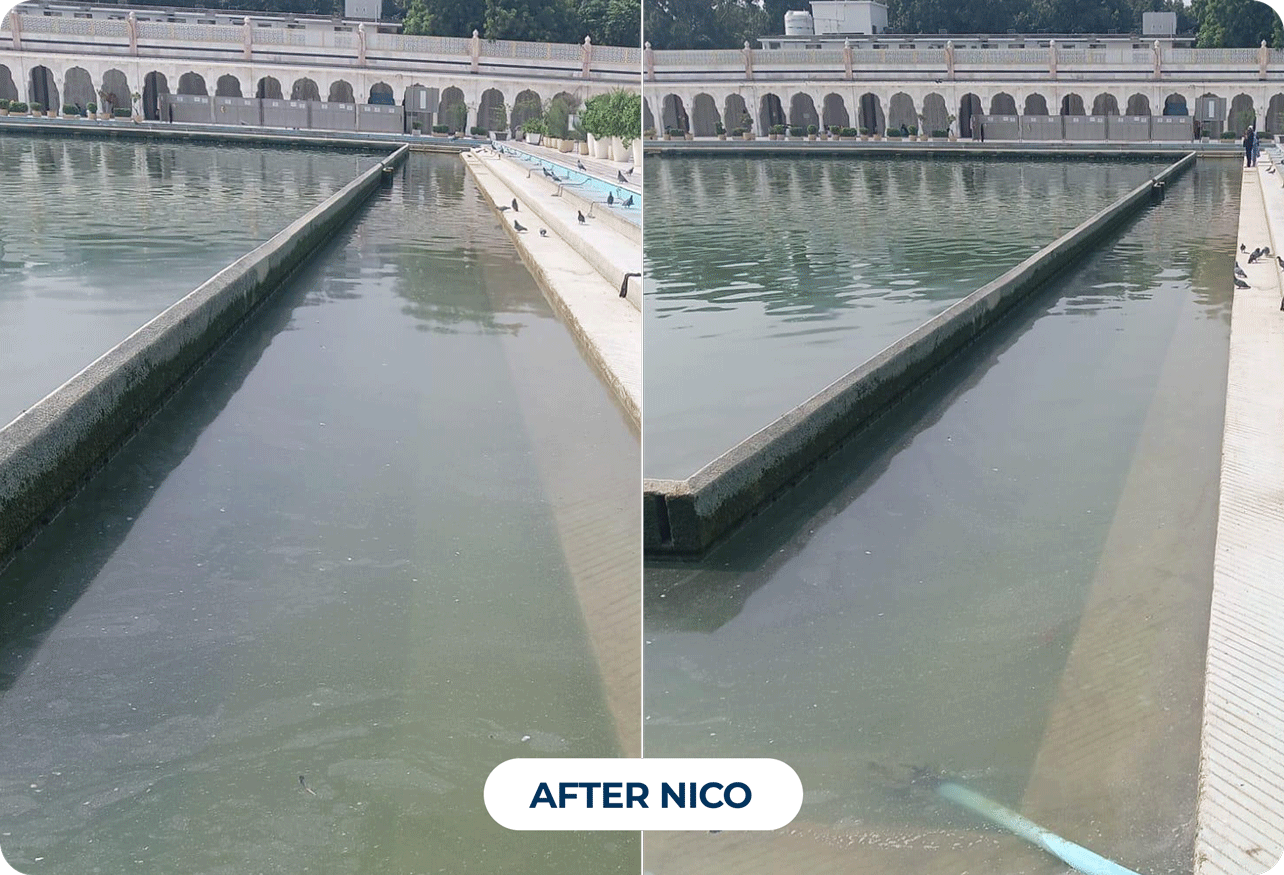
The combined oxygen and ozone nanobubble process supported improvement across the measured water-quality parameters while operating within the existing Sarovar.
The increase in dissolved oxygen created a more oxygen-rich water environment, while ozone provided an oxidative treatment mechanism to support the management of algae-affected conditions and oxidation of organic contaminants.
The corresponding reductions in COD, BOD and TOC further indicate a reduction in measured organic loading within the treated water.
The project demonstrates how nanobubble-based gas transfer and oxidation can be applied to a large existing urban water body without requiring major reconstruction or civil modification.
A key feature of the project was the ability to deploy the nanobubble system within the existing Sarovar environment. The VARUNA 30 m³/hr was installed as a dedicated treatment system, with water circulation enabling treated water to be progressively distributed through the water body.
This approach allows nanobubble technology to be adapted to existing lakes, ponds, Sarovars, reservoirs and other large water bodies where conventional treatment infrastructure may be difficult or impractical to install.
The treatment configuration can also be adapted to site-specific requirements, including water volume, circulation arrangement, treatment objective, gas requirement and prevailing water-quality conditions.
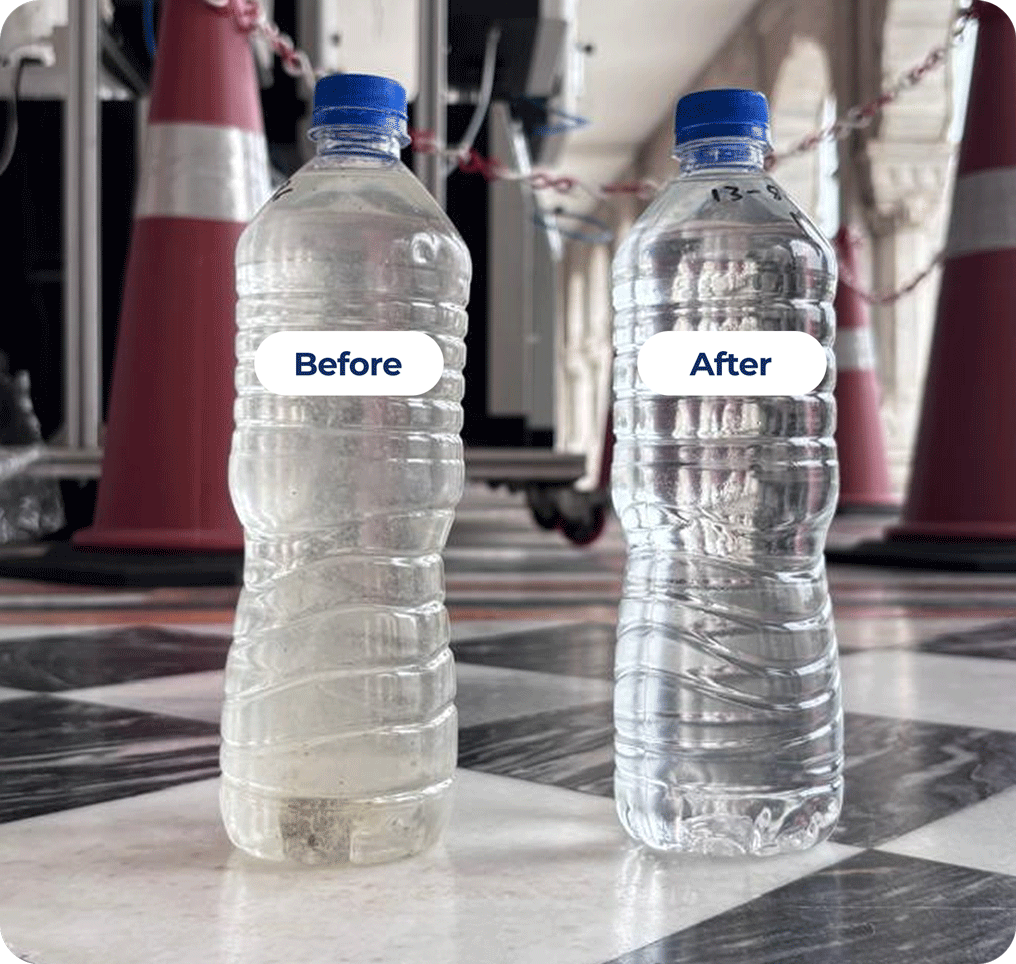
The Bangla Sahib project demonstrates the application of nanobubble technology for in-situ water-quality improvement in a large urban water body.
By combining water circulation with oxygen and ozone nanobubbles, the system supported improved dissolved oxygen conditions and treatment of algae-affected water while operating within the existing infrastructure of the Sarovar.
This approach is particularly relevant for heritage, religious, public and urban water bodies where maintaining the existing structure and minimizing civil intervention are important considerations.
The measured improvements in DO, COD, BOD and TOC provide a practical demonstration of nanobubble-based treatment under real-world operating conditions.
The Bangla Sahib Gurudwara Sarovar project demonstrates how NICO’s VARUNA 30 Nanobubble Technology can be integrated into a large existing water body to address algae-affected conditions and improve measured water-quality parameters without major civil modification.
With an estimated water volume of approximately 1.35 crore litres, the project combined oxygen and ozone nanobubble treatment with water circulation to enhance dissolved oxygen conditions and support the treatment of algae-affected water. Measured dissolved oxygen reached approximately 14 mg/L, while reductions were recorded in COD, BOD and TOC following treatment.
The project demonstrates a broader principle: large urban water bodies do not necessarily need to be reconstructed to be treated. With the right combination of gas transfer, oxidation and circulation, existing water bodies can be treated in situ.
From algae-affected water to improved water quality, Bangla Sahib demonstrates what nanobubble technology can achieve when advanced water engineering is applied to a real-world urban water body.