Nanobubbles for Zoo Pond Restoration & Algae Control National Zoological Park, New Delhi (with Ministry of Environment)
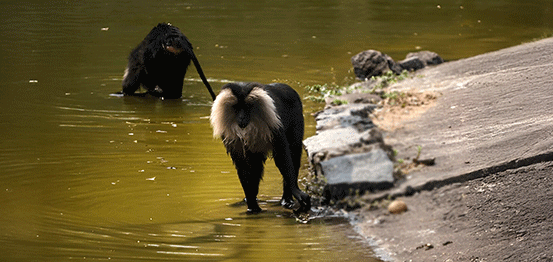
The management at Delhi Zoo faced persistent challenges in controlling excessive algal blooms and maintaining water quality across several ponds. Despite efforts to resolve these issues using conventional aeration systems and fountains, the results were ineffective in reducing algae or improving overall water quality.
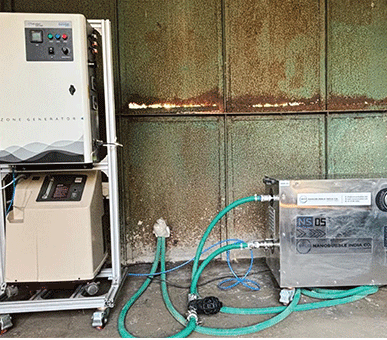
Recognizing the need for a more innovative solution, NICO-Nanobubble India Co. recommended the adoption of nanobubble technology to address the root causes of these problems and enhance water quality sustainably.
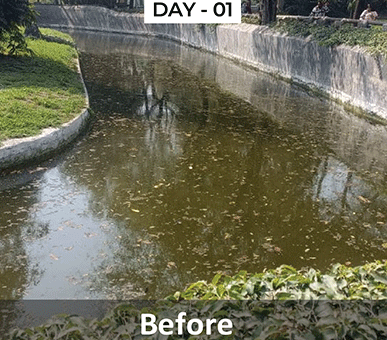
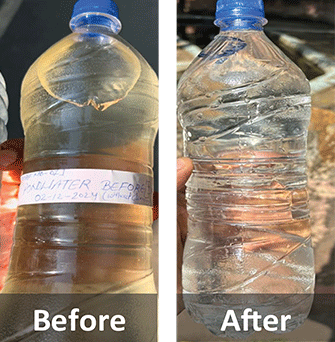
On March 25, 2025, NICO Nanobubble India Co. successfully installed its system at Beat No. 1 at the Delhi Zoo, home to Lion-Tailed Macaque (LTM). As shown in the accompanying figure, the pond’s surface, bottom, and sidewalls were heavily covered with algae prior to the installation.
On May 28, 2025, following the installation of the NICO Nanobubble system at Beat No. 1 on March 25, 2025, the key results of the experiment were as follows:
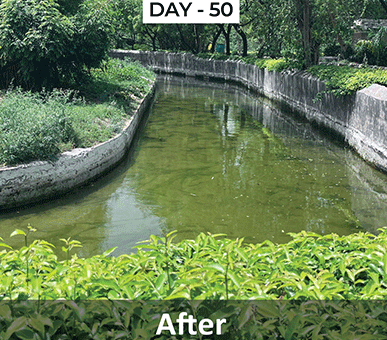
| Units | Beat No. 1 (Before) (25.03.2025) | Beat No. 1 (After) (28.05.2025) | |
|---|---|---|---|
| Total Suspended Solids (TSS) | Mg/L | 102 | 35.2 |
| Total Dissolved Solids (TDS) | Mg/L | 7280 | 3880 |
| BOD | Mg/L | 42 | 15.6 |
| COD | Mg/L | 350 | 130 |
| E-Coli | MPN/100ml | 15.5 | Absent |
| Dissolved Oxygen (DO) | PPM | 6.3 | 22.58 |