Next-Gen Nanobubble Technology

Optimizing Green Hydrogen with
Precision Gas-Liquid Control

Boost green hydrogen production and maximize electrochemical system performance with the NICO VANTA Nanobubble System.

Integrating nanobubble technology into green hydrogen and electrochemical systems enhances water quality, gas transfer, and overall process stability. These ultra-fine bubbles improve gas–liquid interactions, support efficient electrochemical reactions, and enable cleaner, more controlled system operation.

The outcome is higher process efficiency, reduced chemical use, increased system reliability, and optimized performance across hydrogen production and electrochemical applications.

The NICO VANTA Advantage

The NICO VANTA Nanobubble System enhances water quality, gas transfer, and electrolyzer efficiency in green hydrogen and electrochemical systems. It integrates seamlessly with feedwater loops, catalyst cleaning, hydrogen purification, and advanced electrochemical applications.

By improving mass transfer and system stability, it ensures cleaner, more efficient, and reliable hydrogen production.

> 85% Gas Transfer Efficiency
< 200nm Bubble Diameter
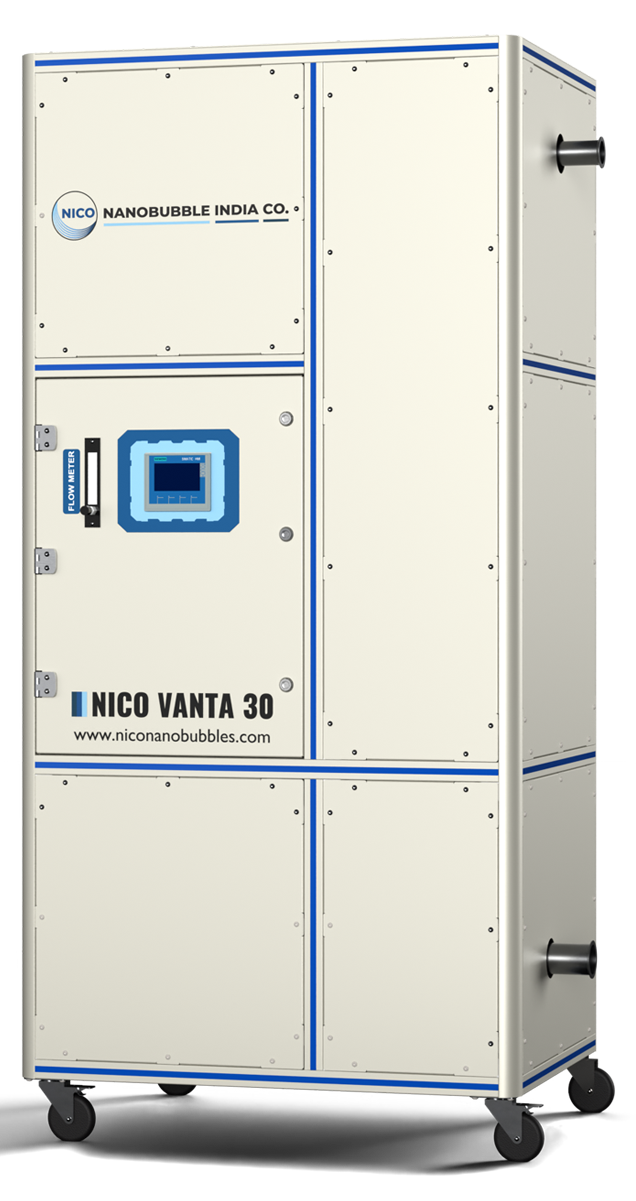
The NICO VANTA

Key Application Areas

Optimizing green hydrogen production and electrochemical systems with advanced
nanobubble technology.

Electrolyzer mass transfer

Electrolyzer mass transfer
optimization

Enhances gas-liquid interaction for improved efficiency and hydrogen production rates.

Commercial

Feedwater
conditioning

Improves water quality to support stable and efficient electrolyzer operation.

Hydrogen

Hydrogen
purification systems

Aids in removing impurities for higher purity hydrogen output.

Indoor Aquatic

Catalyst &
electrode cleaning

Maintains surface activity and performance by preventing fouling and buildup.

Sports

Hydrogen storage
processing

Supports cleaner and more stable processing for safe hydrogen storage systems.

Wound

Photoelectrochemical
systems

Improves reaction efficiency and stability in advanced solar-driven hydrogen technologies.

Key Benefits

Measurable improvements in electrochemical efficiency,
hydrogen production performance, and overall system stability.

View Case Studies View case Studies
Performance & Stability
Enhanced Electrochemical
Performance

Improves gas–liquid mass transfer, boosting electrolyzer efficiency and operational stability.

Higher Yield & Nutrient Efficiency
Optimized Water &
System Quality

Provides cleaner feedwater while reducing catalyst fouling and electrode scaling.

Environmental Management
Improved Gas Utilization &
Purification

Supports better hydrogen purification and enhances oxygen utilization opportunities.

Improved Effluent
Scalable & Versatile
Integration

Suitable for both research-scale and industrial hydrogen systems with easy integration.

Technical Specifications

Compare models to find the right NICO VANTA Nanobubble System for your green hydrogen and electrochemical system requirements.

Models Units NICO VANTA 05 NICO VANTA 30
Flow Rate m³/hr 5 26
LPH 5000 26000
System Pressure bar 2-2.5 2.5-3
Nanobubble Size nm 50-200 50-200
Zeta potential mV up to -43 mV up to -43 mV
Gas usage Oxygen, Ozone
Oxygen Flow Rate LPM 2 8
Oxygen Pressure PSI >7 >7
Ozone Flow Rate GPH 8 17
Ozone Pressure PSI < 1.1-1.2 < 1.1-1.2
Suction Line Size inch 1.0 2.5
Discharge Line Size inch 1.0 2.0
System power kW 0.75 5.5

Frequently Asked Questions

Where can the NICO VANTA Nanobubble System be applied in hydrogen technologies?

The system can be integrated into electrolyzer feedwater loops, hydrogen purification systems, catalyst cleaning processes, storage systems, and advanced technologies like photocatalytic and photoelectrochemical reactors.

How does NICO VANTA improve electrolyzer and hydrogen production performance?

By generating ultra-fine nanobubbles, it enhances gas–liquid mass transfer, stabilizes electrochemical environments, improves feedwater quality, and boosts overall electrolyzer efficiency and reliability.

What are the key benefits of using nanobubble technology in electrochemical systems?

It improves mass transfer, reduces catalyst fouling and electrode scaling, supports hydrogen purification, enhances oxygen utilization, and is suitable for both research-scale and industrial hydrogen applications.

Maximize Performance in Your
Hydrogen Systems Today