Optimizing Clarified Water Quality in
Semiconductor ETPs Using Nanobubbles
Semiconductor manufacturing generates high-purity wastewater streams that require advanced treatment for effective reuse. Even after primary and secondary treatment, clarified water often contains residual turbidity, organic load, and nutrients that impact downstream polishing systems.
This case study evaluates the effectiveness of NICO Nanobubble Technology in improving clarified water quality, reducing contaminant load, and enhancing downstream treatment performance in a semiconductor effluent treatment plant (ETP) under real plant conditions.
Prior to the integration of nanobubble technology, the clarified water stream in the semiconductor ETP continued to exhibit residual turbidity, organic load (TOC, COD, BOD), suspended solids, and nutrients such as ammonia, phosphate, and nitrate.
These contaminants increased the burden on downstream polishing units including filtration and membrane systems, leading to higher chemical consumption, reduced operational efficiency, and variability in treated water quality.
The facility required a solution that could enhance water quality in a non-invasive manner, without disrupting existing operations, while remaining scalable for full-scale implementation.
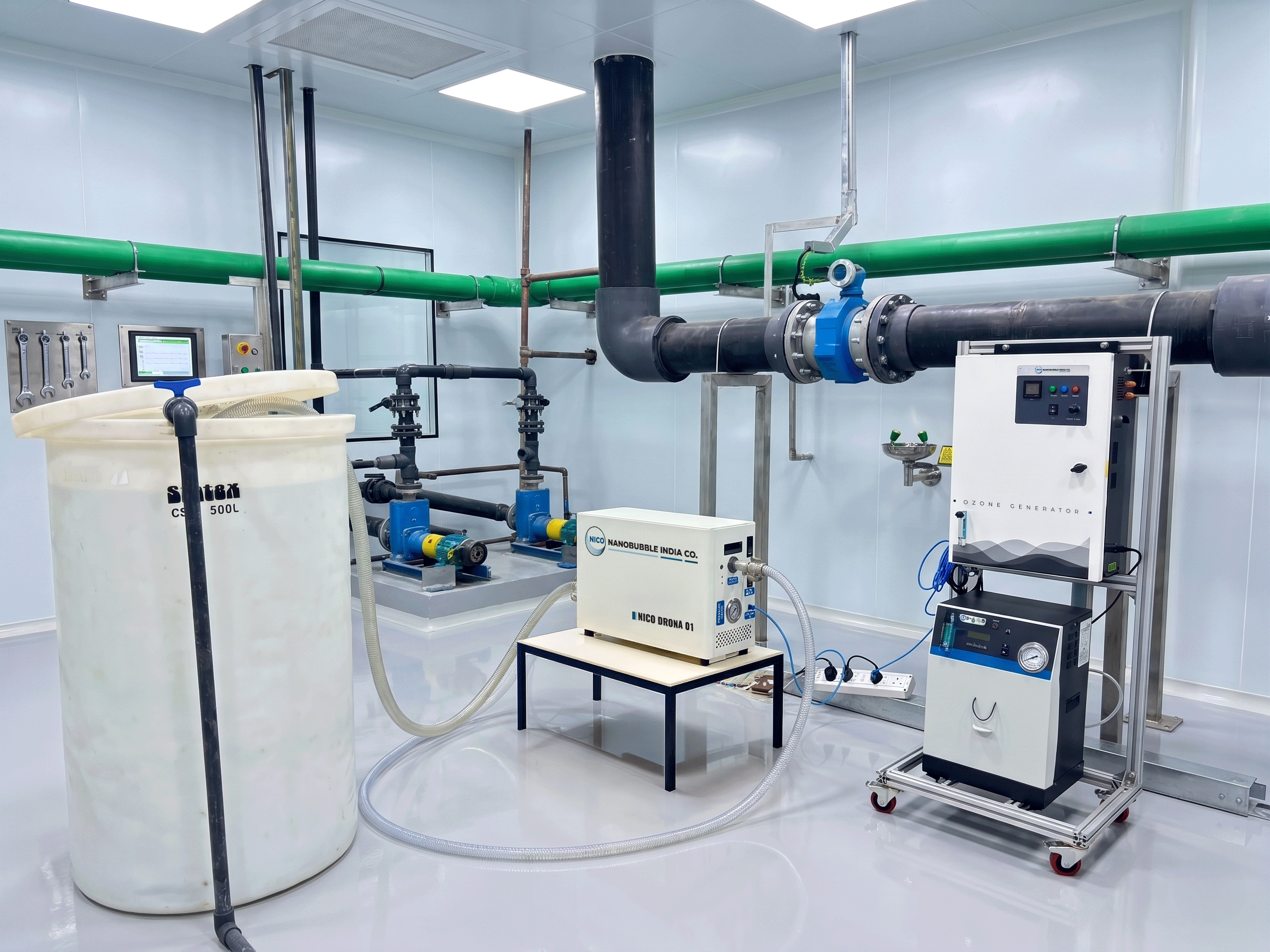
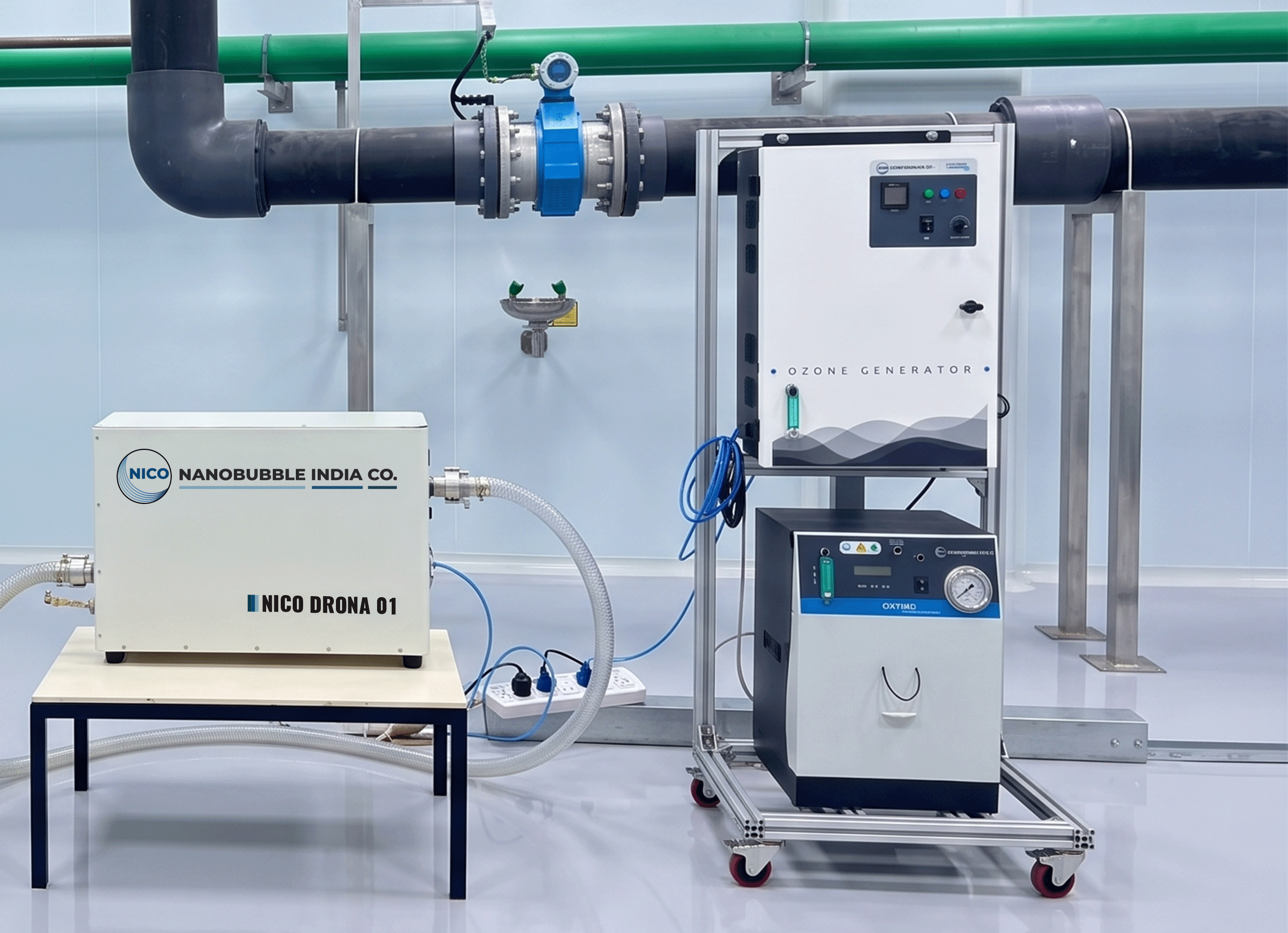
NICO deployed a skid-mounted oxygen nanobubble system at the clarified water stage in a side-stream configuration. The system was integrated without affecting the main process and operated under actual plant conditions.
The nanobubble system improved contaminant reduction through enhanced gas–liquid interaction and partial oxidation, helping improve downstream treatment performance.
| S. No. | Parameter | Removal Efficiency (%) | |
|---|---|---|---|
| 1 | Turbidity | 50.0 | |
| 2 | Biochemical Oxygen Demand (BOD) | 28.3 | |
| 3 | Chemical Oxygen Demand (COD) | 22.5 | |
| 4 | Total Organic Carbon (TOC) | 46.9 | |
| 5 | Total Suspended Solids (TSS) | 40.7 | |
| 6 | Total Ammonia | 13.3 | |
| 7 | Total Phosphate as PO₄ | 36.9 | |
| 8 | Nitrate | 27.5 |
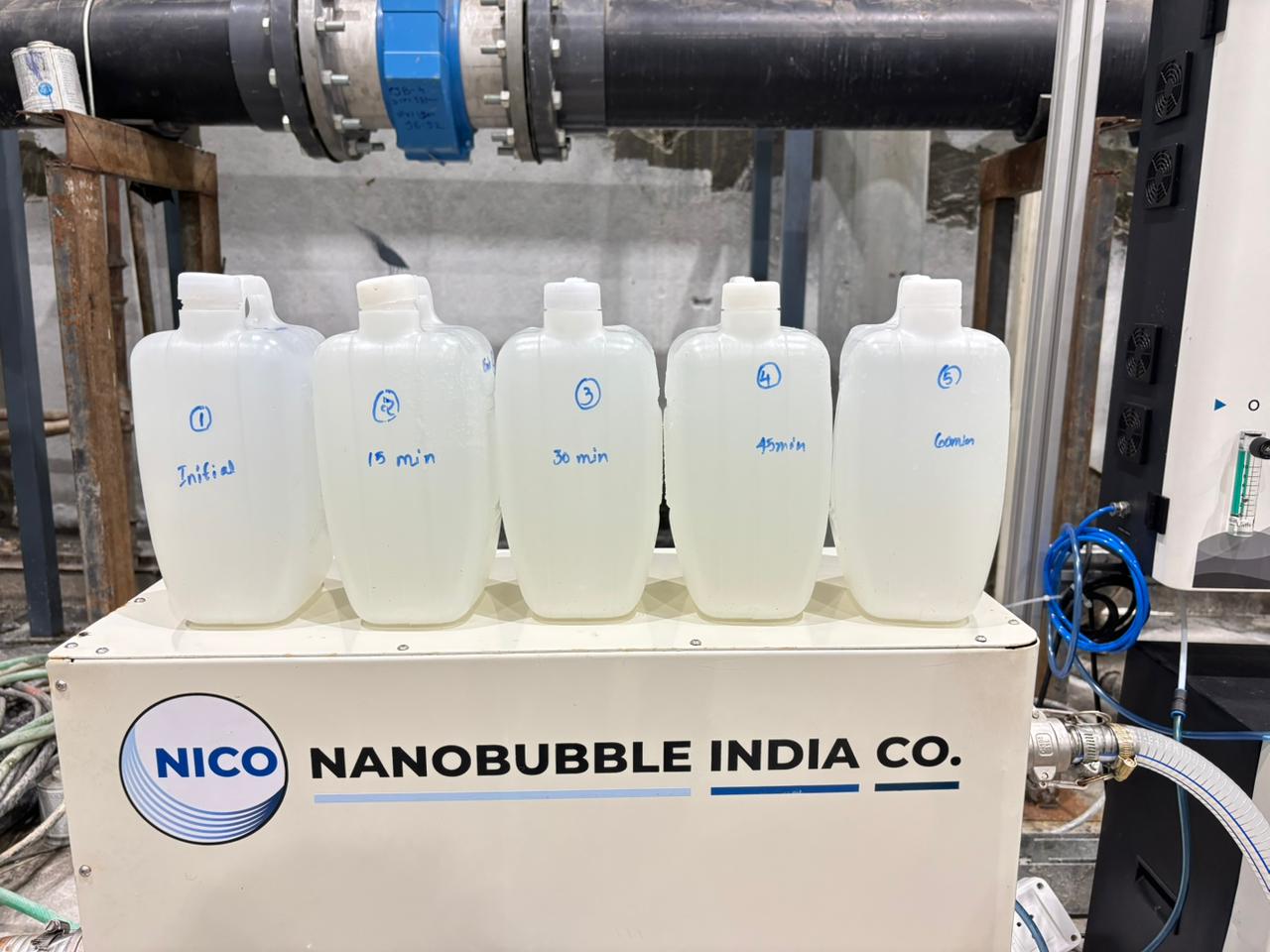
The pilot demonstrated measurable improvement in clarified wastewater quality. Significant reductions in TOC, TSS, and turbidity enhanced suitability for downstream units such as PSF, ACF, RO, and mixed-bed polishing systems. Reductions in COD and BOD indicate partial oxidation and improved biodegradability, while decreased levels of ammonia, phosphate, and nitrate lowered the contaminant load on subsequent treatment stages.
Overall, the system supported:
The study demonstrates that NICO Nanobubble Technology is an effective and practical solution for enhancing clarified water quality in semiconductor ETP systems. By enabling significant contaminant reduction through a non-invasive, side-stream approach, the technology improves downstream treatment efficiency and supports higher water reuse potential.
The successful pilot highlights a scalable pathway for integrating nanobubble systems in high-performance industrial ETPs, enabling improved sustainability, reduced chemical dependence, and optimized plant operations.