Enhanced Oxygenation for Temple Pond Rejuvenation
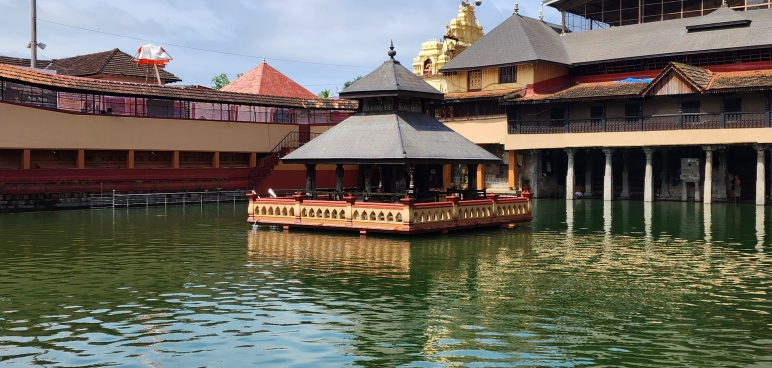
Temple ponds in India hold significant cultural, religious, and ecological importance. The Krishna Matha Pushkarani, associated with the historic Sri Krishna Matha in Udupi, had experienced progressive deterioration in water quality due to the accumulation of organic matter, algal proliferation, reduced dissolved oxygen levels, and microbial contamination.
These conditions resulted in degraded water quality, foul odor, elevated organic load, and loss of ecological balance. A sustainable and non-invasive intervention was therefore required to restore the water body while preserving its cultural and environmental significance.
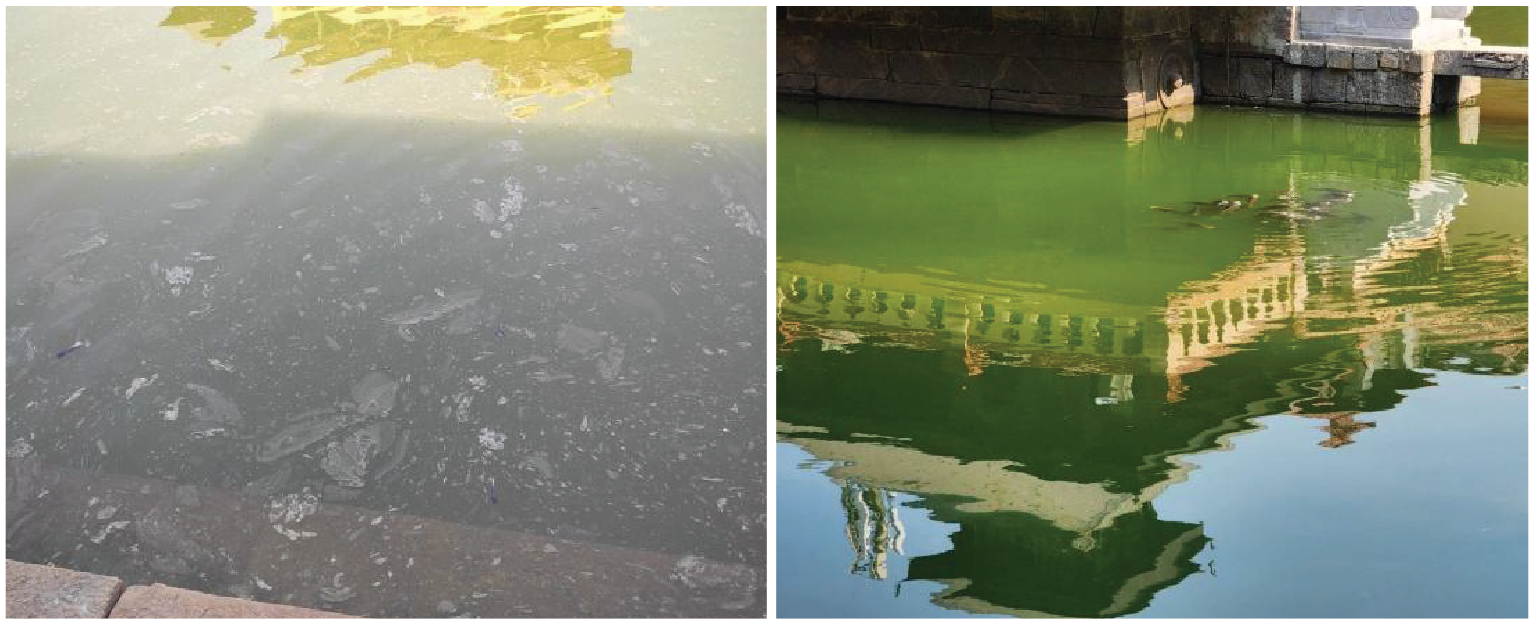 Before installation
Prior to the deployment of nanobubble technology, the Krishna Matha Pushkarani exhibited several challenges typical of heritage temple water bodies:
NICO deployed an advanced nanobubble-based aeration andoxidation system, comprising:
The system generates ultra-fine gas bubbles (<200 nm), which remain suspended in water for extended durations, enabling enhanced gas transfer, in-situ oxidation, and uniform treatment across the entire water body.
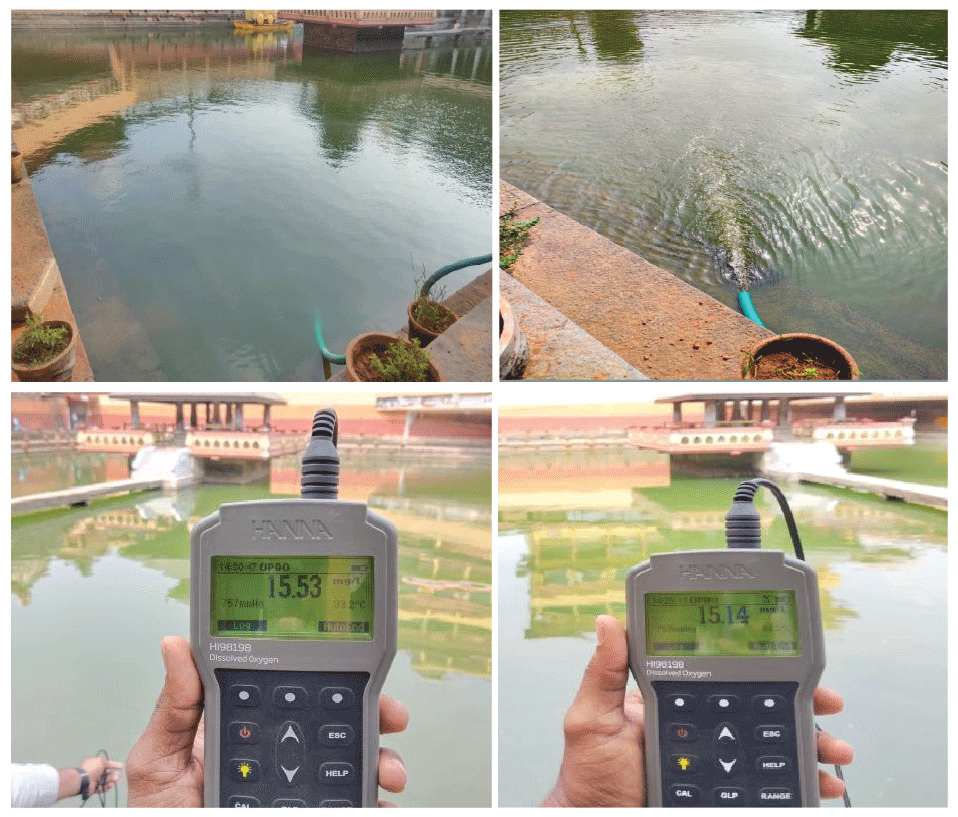 After Installation
| Parameter | Unit | Before Implementation | After Implementation |
|---|---|---|---|
| Dissolved Oxygen (DO) | mg/L | 5 | 15 |
| Biological Oxygen Demand (BOD) | mg/L | 25 | < 5 |
| Chemical Oxygen Demand (COD) | mg/L | 150 | < 50 |
| E. coli | MPN/100 mL | 100 | Absent |
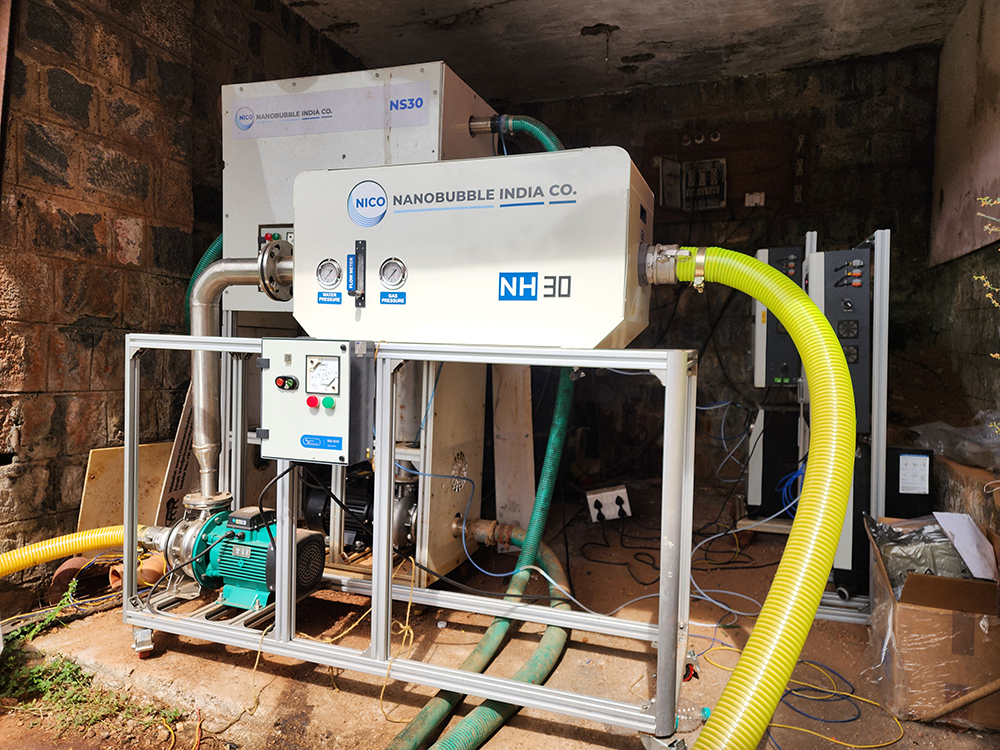
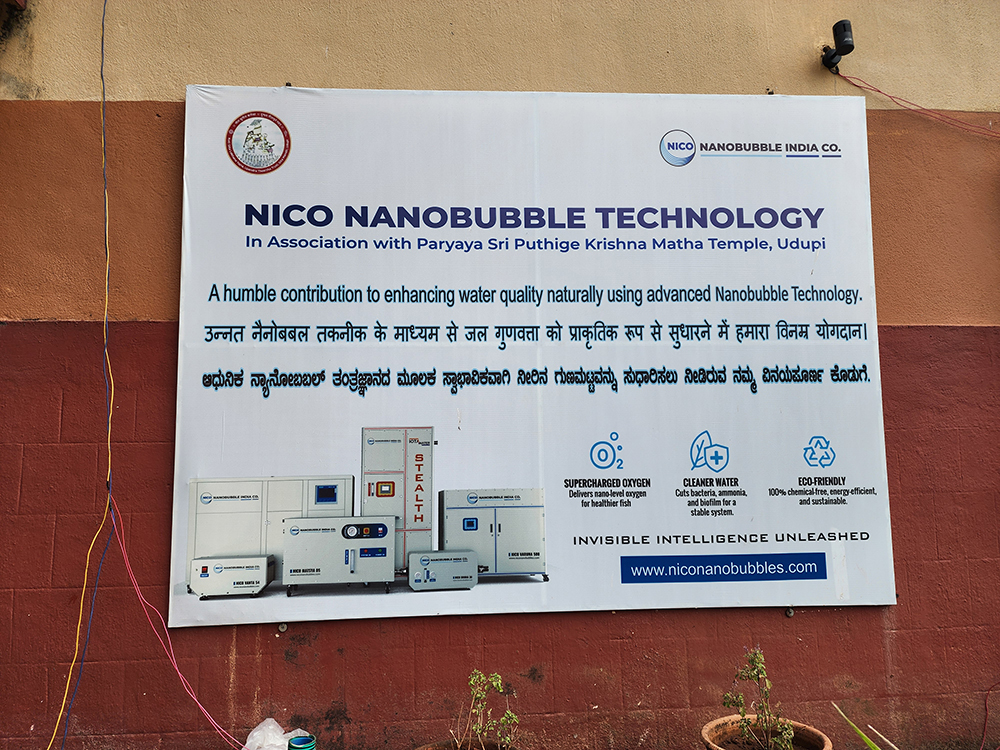
The implementation of NICO’s nanobubble technology resulted in significant improvements across physical, chemical,and biological parameters of the pond ecosystem.
The deployment of NICO’s nanobubble technology at Krishna Matha Pushkarani demonstrates its effectiveness as a sustainable and non-invasive solution for restoring degraded water bodies. The system successfully enhanced water quality, controlled biological and chemical contaminants, and restored ecological balance without the use of chemicals.
This case study highlights the strong potential of nanobubble technology for scalable application in the rejuvenation of temple ponds, lakes, and other sensitive water systems across India.