Better Water Decisions for Thai Growers
Thailand’s orchards, vegetable farms, nurseries and protected crops operate with different soils, rainfall and irrigation arrangements. Stored water may change with heat, sediment and biological activity before reaching the crop.
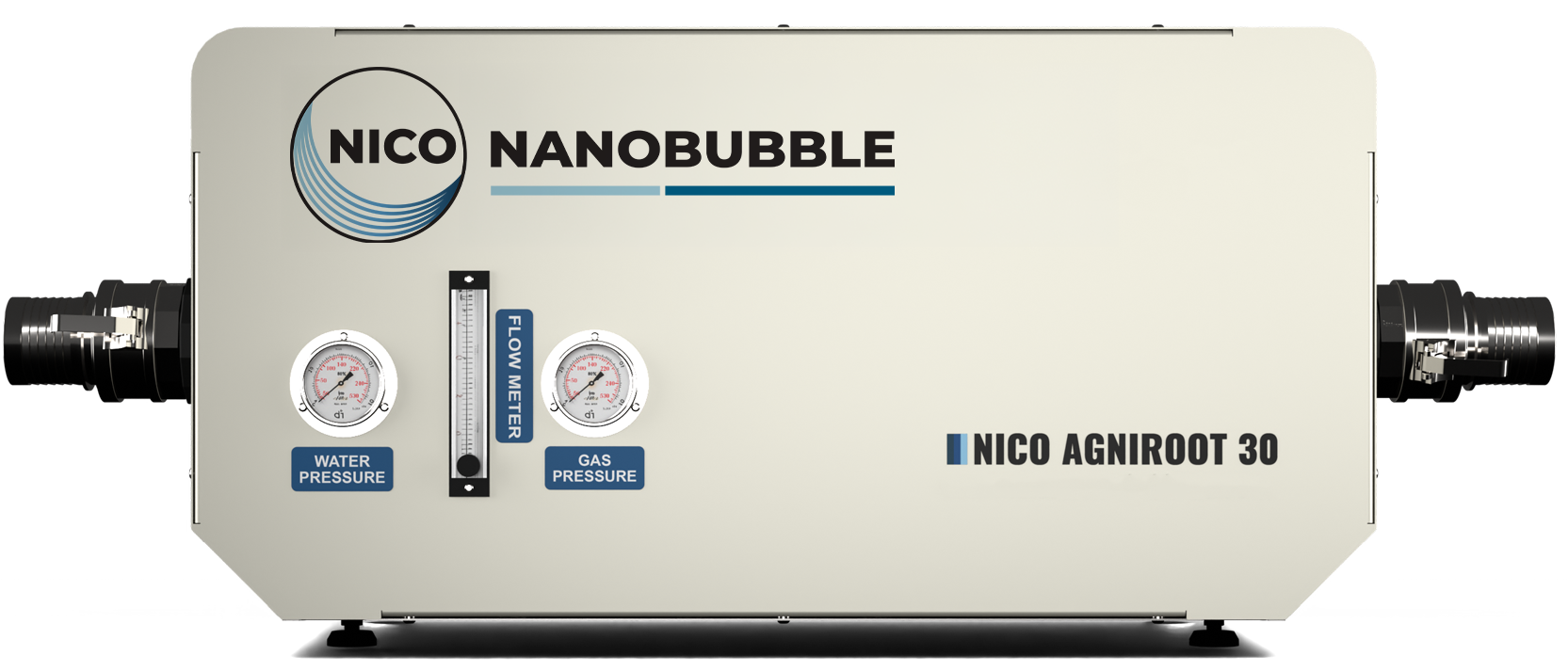
NICO systems can be evaluated for oxygen-rich irrigation in compatible reservoirs, tanks and nutrient loops. Begin by identifying whether oxygen limitation is relevant to the crop or water-system problem.
Common Growing Challenges
- Warm storage water and variable oxygen
- Sediment or organic matter in reservoirs
- Changing source-water conditions through the season
- Uneven distribution along irrigation lines
- Poor drainage or compacted growing media
- Nutrient and salinity constraints needing separate management
- Limited measurements at the point of use
How Nanobubbles Can Fit
Reservoir Conditioning: Assess a loop serving stored water, with readings at the outlet and irrigation endpoint.
Nursery Evaluation: Compare representative plants under consistent growing and watering conditions.
Protected Cultivation: Review integration with greenhouse or fertigation systems, including nutrients, materials and sanitation.
Measured Operation: Coordinate treatment with irrigation schedules, temperature and actual oxygen conditions.
Potential Benefits to Evaluate
- More consistent oxygen in suitable storage systems
- Better information about delivered water
- Support where oxygen limitation is demonstrated
- Integration with selected existing infrastructure
- Controlled trials before expansion
Oxygenated water does not correct poor drainage, soil compaction or unsuitable nutrition. Claims about yield, roots, quality, disease or reduced inputs require crop-specific evidence.
Thai Application Areas
Orchards and Fruit Crops: Evaluate suitable irrigation-water trials for high-value fruit, with attention to soil and drainage.
Vegetables and Nurseries: Assess tank or reservoir applications where comparison groups and water delivery can be measured.
Flowers and Protected Crops: Review compatible nursery and greenhouse loops for closely managed cultivation.
Hydroponics: Coordinate oxygen with nutrient concentration, pH, temperature and hygiene in recirculating systems.
Irrigation Storage: Assess water before distribution without assuming that the same result will occur in every crop or field system.
Follow the Water to the Plant
Measure after storage and distribution because reservoir conditions may differ from those reaching the roots. Review crop stage, substrate, drainage, source analysis, volume and equipment before selecting a package.
Keep routine filtration, hygiene and agronomic controls in place. Record rainfall, nutrition and irrigation changes during evaluation.
Start with a Defined Trial
Agree the outcome and comparison method before installation. Representative plots or crop cycles can help separate water-treatment effects from seasonal and management changes.
Expand only when results are repeatable and the installation is practical to maintain.