Start with the Intended Use
Reclaimed water should be designed around the task it must serve. Landscape irrigation, suitable industrial uses and other non-potable applications can have different quality, storage and exposure requirements.
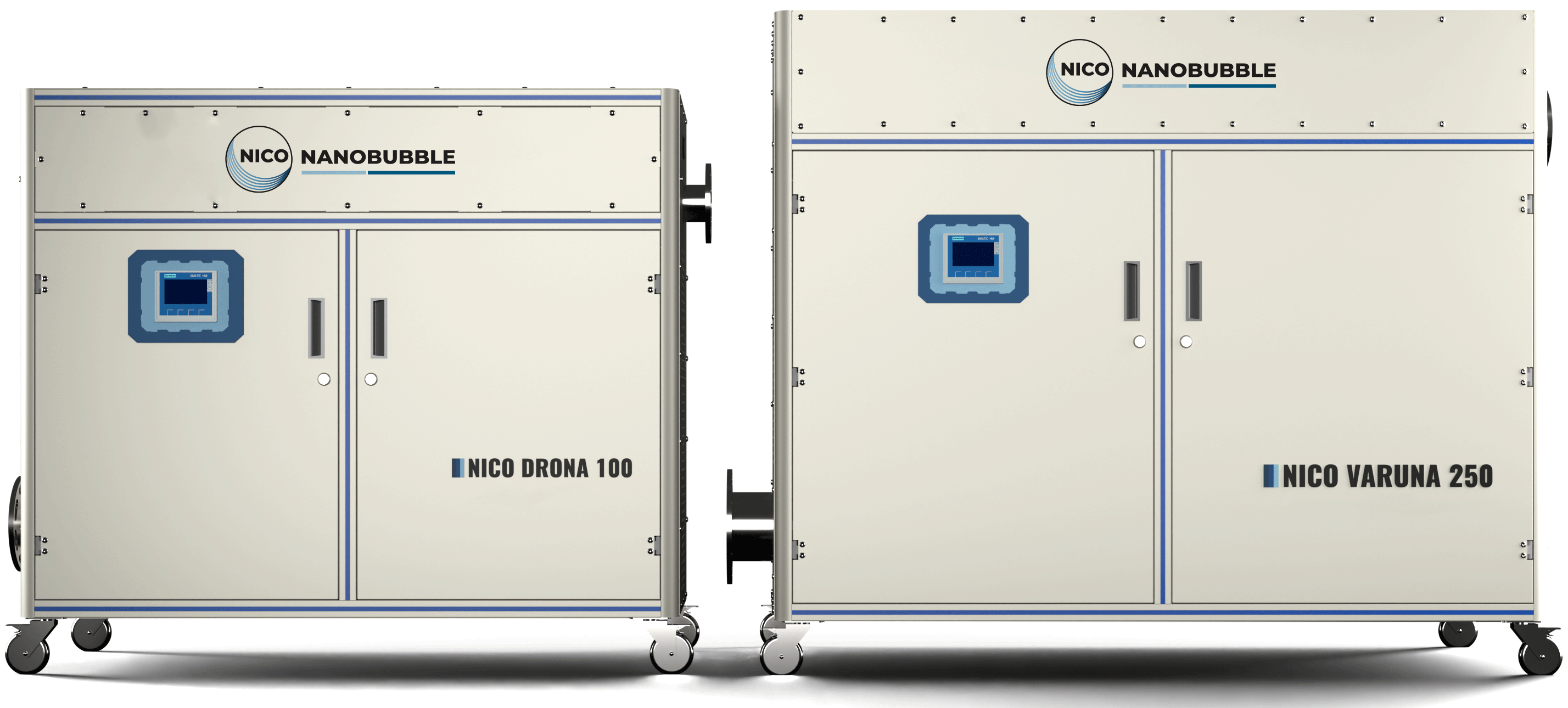
For Thai municipal projects, NICO nanobubble systems may support selected treatment stages within a complete reuse programme. Oxygen enrichment alone does not make sewage safe or establish that treated water meets the requirements of its intended use.
Common Reuse Challenges
- Variable influent and wet-weather flows
- Inconsistent treatment performance
- Solids or nutrients affecting downstream processes
- Pathogen and exposure risks
- Changes during storage and distribution
- Salinity or contaminants unsuitable for the end use
- Cross-connection and backflow risks
- Demand that differs from wastewater production
Define the Reuse Pathway
Intended Application: Identify users, exposure routes and the quality required before choosing treatment equipment.
Treatment Stages: Review collection, screening, biological treatment, solids separation, filtration and disinfection as needed.
Storage and Distribution: Consider residence time, regrowth, sediment, monitoring and the point at which quality must be maintained.
Off-Specification Water: Provide an operational response when treatment or monitoring indicates unsuitable quality. Reuse delivery should not continue solely because demand exists.
Where Nanobubbles May Fit
Air or oxygen nanobubbles can be evaluated in compatible aerobic stages where gas transfer limits biological performance. The design must consider retention, biomass, circulation and influent suitability.
Anoxic zones and other nutrient-removal functions have different requirements. Oxygen-rich returns must preserve the intended process boundaries rather than disrupt them.
Some storage applications may warrant oxygen assessment, but oxygenation is not a substitute for a validated microbial-control strategy. Avoid treating odour improvement as proof of safe reclaimed water.
Selected Oxidation or Polishing
Ozone may be considered for defined objectives after testing. Assess dose, contact time, demand, residuals, by-products and downstream effects. Appropriate materials, exposure protection, ventilation and off-gas handling are required.
Other technologies may still be needed for suspended matter, salts, nutrients or contaminants that are not adequately addressed by the proposed process. The intended reuse determines the complete treatment requirement.
Plan for Reliable Delivery
Where proposed uses include landscape irrigation or suitable industrial duties, assess distribution distance, storage, seasonal demand and the recipient’s process requirements. These are potential assessment areas, not blanket approvals for use.
Provide clear identification and separation of reclaimed-water systems, maintenance responsibilities and operator procedures. Consider what happens during power loss, sensor failure, unusual influent or interrupted demand.
Measure the Whole Reuse Chain
Establish influent and treatment-stage baselines using flow, organic load, solids, pH, temperature and relevant nutrients. The end-use assessment may also require microbiological and specific chemical testing.
Verify water quality at the required delivery point, not only immediately after treatment. Storage or distribution can alter conditions and introduce new risks.
Record pumping, gas supply, retained treatment equipment and reuse-system energy when evaluating costs. Water savings should reflect verified replacement of another supply, not merely the volume treated.
Define Acceptance Before a Pilot
Agree treatment indicators, reuse-quality endpoints, comparison conditions and responses to failure. Include representative variations in flow and load.
A pilot should establish the nanobubble system’s contribution and the functions still required from the wider plant. Final design and use require the relevant site-specific technical and regulatory review.