Treatment That Follows the Production Process
Thai seafood and food-processing facilities can generate very different wastewater conditions during receiving, preparation, production, washing and sanitation. Proteins, oils, solids, salt and cleaning chemicals may enter in distinct events.
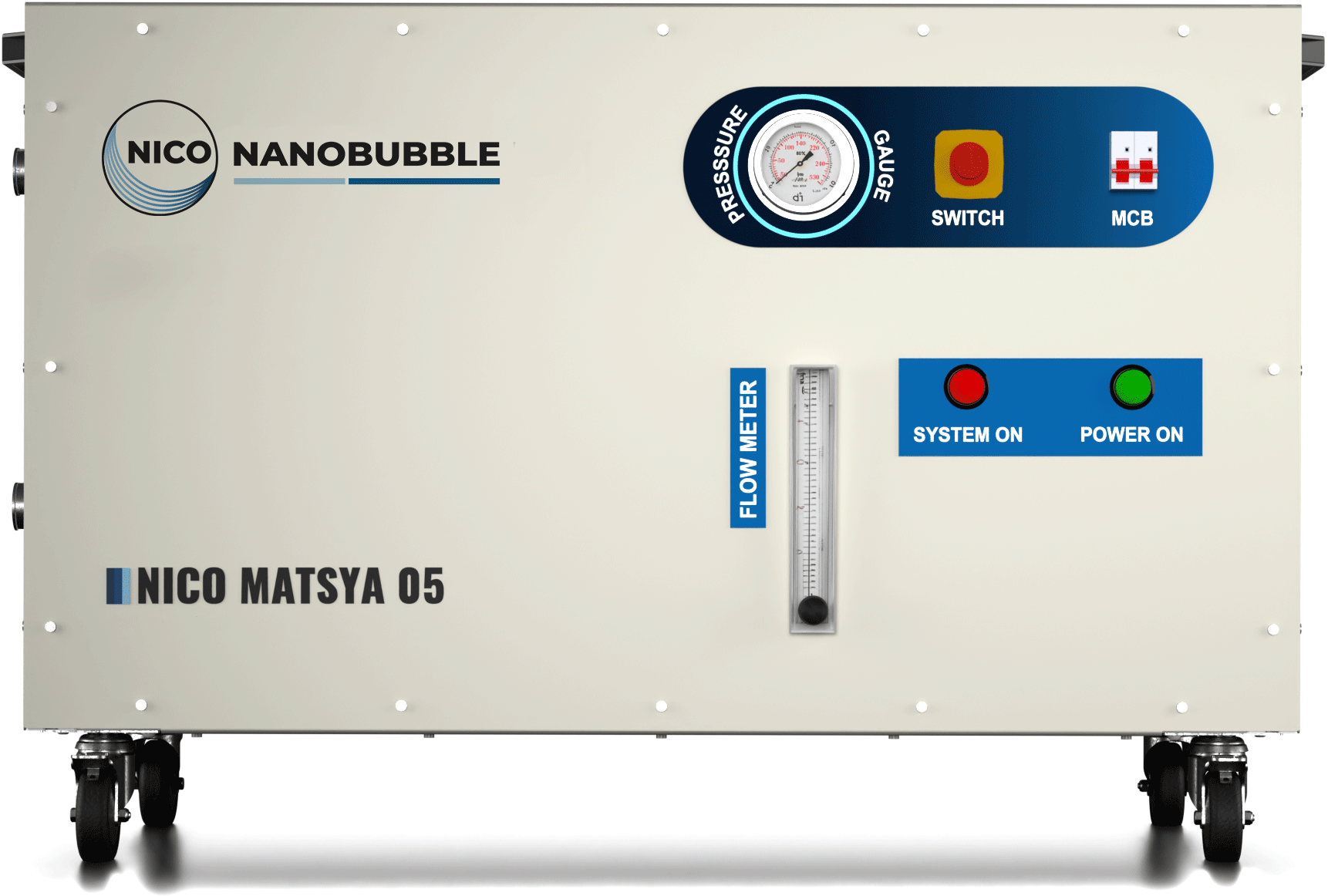
NICO nanobubble systems may support suitable aerobic treatment where oxygen delivery is limiting. Assessment begins with the process schedule and water entering the proposed stage, not the assumption that average daily flow describes the whole requirement.
Common Effluent Challenges
- Variable organic loads from product losses
- Solids, fats and oils affecting treatment equipment
- Saline streams or brines requiring separate attention
- pH changes and sanitation-chemical discharges
- Short-duration peaks during cleaning
- Uneven oxygen in aerobic basins
- Odour from storage or stagnant zones
- Limited space and maintenance access
Start with the Upstream Stages
Source Management: Identify recoverable material and concentrated streams before they enter the treatment plant. Reducing product loss can lower the load more effectively than treating it later.
Screening and Separation: Remove unsuitable solids, fats and oils using the methods appropriate to the stream. Nanobubbles do not eliminate these requirements.
Equalisation: Review how flow and composition are balanced before biological treatment. Peak cleaning events may need controls even when daily average values appear acceptable.
Biological Compatibility: Assess salinity, pH, temperature and inhibitory substances. More oxygen cannot compensate for a stream that harms the treatment biology.
Where Nanobubble Oxygenation Can Help
Aerobic Gas Transfer: Evaluate air or oxygen delivery in a suitable basin or recirculation loop with a documented oxygen shortfall.
Demand-Based Operation: Coordinate schedules with production and representative oxygen readings, allowing for changes through the shift.
Treatment Distribution: Position intake and return points to serve the intended zone and avoid short-circuiting.
Retrofit Integration: Review existing pumps, pipework, materials and controls before selecting a mixer or packaged arrangement.
Keep Process Boundaries Clear
If anaerobic treatment or biogas recovery is present, preserve its operating conditions. Oxygen is not a routine addition to a digester or covered anaerobic lagoon.
Within aerobic treatment, essential mixing may still be required. Existing aerators can contribute suspension and circulation as well as gas transfer; changing their runtime affects more than energy use.
Defined Polishing Objectives
Residual colour, dissolved contaminants or other final-quality concerns may need a separate treatment mechanism. Establish the contaminant and required endpoint before selecting an oxidation process.
Ozone requires treatability testing covering demand, contact, residuals and by-products. Saline streams warrant particular by-product assessment. Suitable materials, ventilation, exposure controls and off-gas management are essential.
A wastewater-treatment result is not approval to use the water in food-contact applications. Any such use requires a separately validated quality and hygiene framework.
Measure Across the Shift
Review flow, BOD, COD, solids, fats and oils, salinity, pH and temperature. Capture production and cleaning periods rather than one convenient sampling time.
Assess mass loading as well as concentration. Record product throughput, cleaning events, source changes and upstream performance throughout the pilot.
Make the Trial Comparable
Set acceptance criteria for oxygen stability, treatment performance, maintenance and complete-system energy. Include pumping, gas supply and retained equipment in the comparison.
The final review should identify the effect of the installation, remaining limitations and operating requirements. Nanobubbles complement source management, separation, biological control and laboratory verification; they do not replace the complete treatment train.